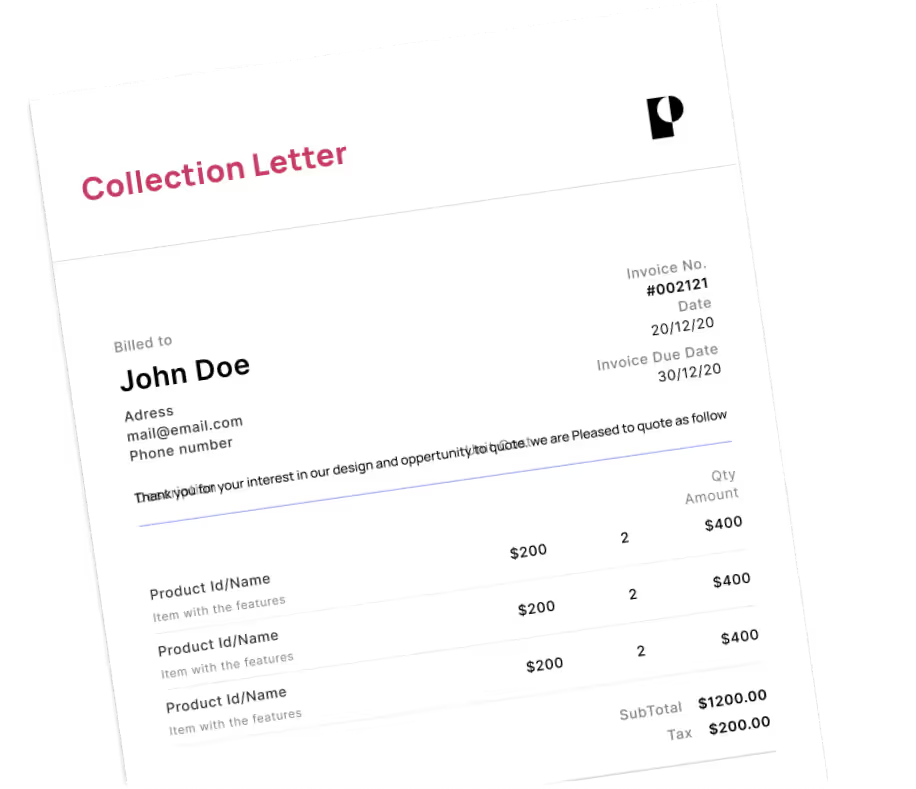
Cobro de deudas en China — Honorarios a éxito
Tus reclamaciones son gestionadas exclusivamente por Ningbo Esteem Consulting (NB Esteem), nuestro socio local con licencia para el recobro de deudas (zhai wu cui shou) en China. Con más de 12 años de experiencia y siendo miembro de LIC International, el recobro de tu deuda está en buenas manos. Envía tu reclamación en minutos, haz seguimiento del progreso en tiempo real y paga solo cuando se recupere tu dinero.


Obtén asesoramiento experto gratis
Respuesta de un especialista en 24 horas.
¿Por qué elegir Debitura para el recobro de deudas en China?
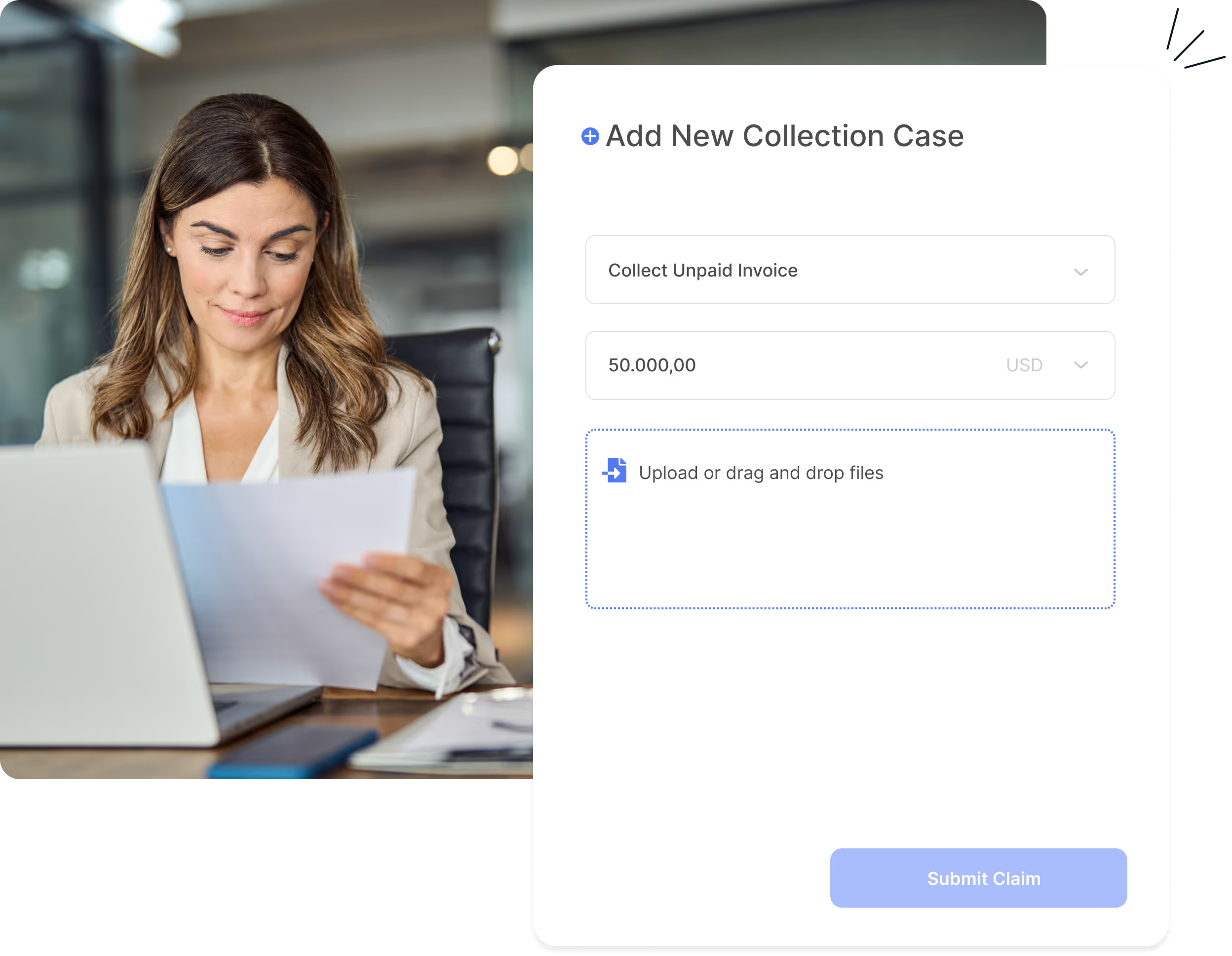
Risk-free debt collection in China
Debitura recovers unpaid invoices from debtors in China through our platform: submit your claim, track it in real time, and pay only when money comes in. Debitura is the platform; the regulated work in China is performed by our exclusive local partner, Ningbo Esteem Consulting (NB Esteem), a Ningbo-based consulting firm with 12+ years of expertise and a member of LIC International, working alongside licensed Chinese law firms so demands carry law-firm letterhead.
- Sin riesgos: Pague solo cuando recuperemos su dinero.
- Configuración rápida: Envíe facturas con solo unos clics.
- Seguimiento en tiempo real: Supervise el progreso en vivo en un solo portal.
- Experiencia local: El equipo bilingüe gestiona todo en inglés y chino.

Cómo iniciar el recobro de deudas en China
- Sube tu reclamación: Introduce los datos del deudor y sube las facturas a través del panel de control de Debitura, la API o la integración con tu ERP. Tarda menos de 2 minutos.
- NB Esteem se encarga: Nuestro socio local contacta con tu deudor en chino en un plazo de 24 horas, utilizando estrategias de negociación probadas.
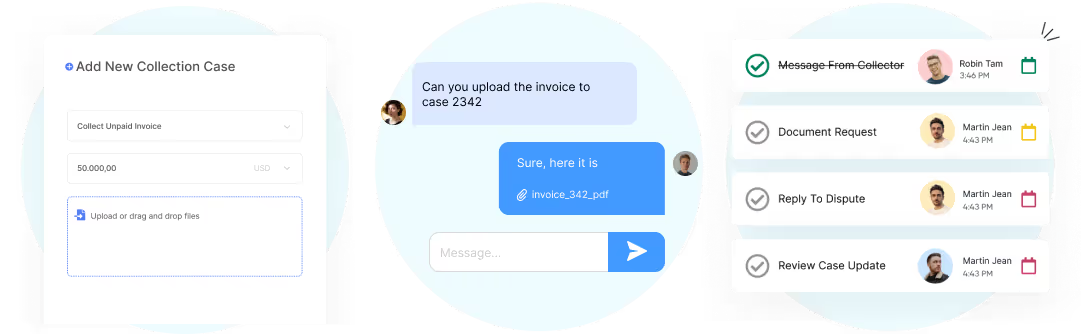
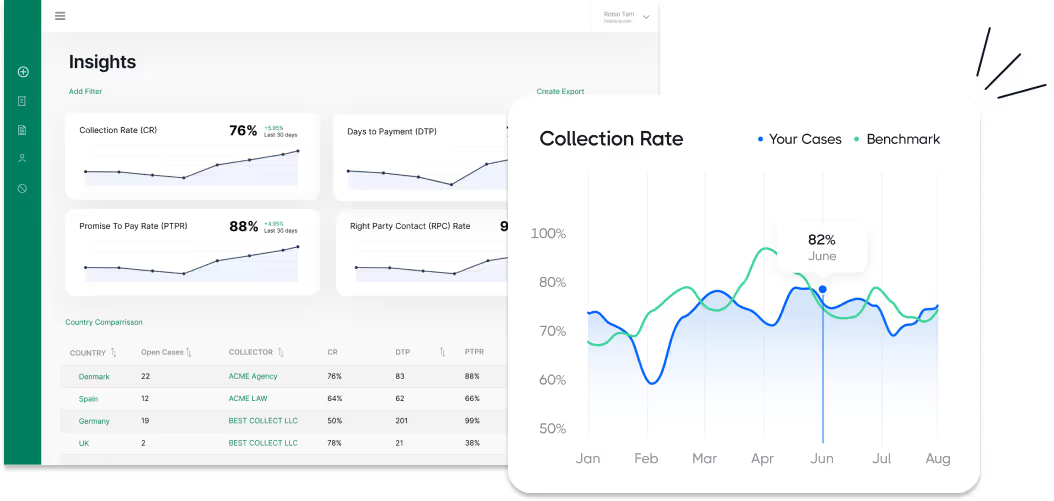
- Haz seguimiento y recibe el pago: Supervisa el progreso en tiempo real. Cuando se recuperan los fondos, recibes el pago menos los honorarios de éxito.
¿Ya utilizas SAP, Oracle o Microsoft Dynamics? Conéctate a través de nuestras integraciones ERP para el envío automatizado de reclamaciones.

Precios transparentes y basados en el éxito
Con Debitura, solo paga si tenemos éxito. El recobro extrajudicial es con honorarios a éxito: un honorario de éxito deducido de los importes recuperados, facturado localmente por su socio. Las tarifas dependen del país del deudor, no del suyo.
- Deudores en Europa (UE, Islandia, Liechtenstein, Noruega, Reino Unido y Suiza): honorarios de éxito a partir del 6 % según el tamaño de la reclamación.
- Deudores en el resto del mundo: honorarios de éxito a partir del 7,5 % según el tamaño de la reclamación.
- Reclamaciones antiguas: se aplica un recargo para las reclamaciones con 12-24 meses de retraso y para las reclamaciones con más de 24 meses de antigüedad.
- Las Acciones judiciales son opcionales: usted aprueba presupuestos de precio fijo antes de cualquier gasto legal.
Consulte la página de Precios para ver la tabla completa de tarifas, u obtenga un presupuesto instantáneo al subir una reclamación.
¿Cómo funciona el cobro de deudas en China?
El cobro de deudas en China comienza con una fase amistosa gestionada localmente por Ningbo Esteem Consulting Co., Ltd.: recordatorios y una demanda formal de pago, con el objetivo de obtener el pago completo o un reconocimiento escrito de la deuda. La mayoría de las reclamaciones no disputadas se resuelven en esta etapa. Si el deudor sigue sin pagar, la escalada nunca es automática; su socio evalúa la vía legal y usted aprueba un presupuesto de precio fijo antes de cualquier paso judicial.
Los cuatro pasos desde la factura impagada hasta el dinero recuperado
- Step 1, Amicable collection: reminders, a formal demand and negotiation, handled locally by Ningbo Esteem Consulting Co., Ltd. Most undisputed claims are resolved here, without going to court.
- Paso 2, Título ejecutivo: si el deudor sigue sin pagar, su socio evalúa la vía legal para obtener un título ejecutivo, y usted aprueba un presupuesto de precio fijo antes de que se proceda con cualquier acción.
- Step 3, Enforcement: with a title, the people's courts can freeze and transfer bank deposits, withhold income, and seal up, auction or sell property until the claim is recovered.
- Paso 4, Insolvencia: si el deudor no puede pagar, su prueba de crédito se presenta en el proceso de insolvencia y cualquier distribución se supervisa en su nombre.
Cada paso se registra en su panel de control, y nada escala sin su aprobación. Todos los detalles legales para China se encuentran en la guía a continuación.

Cobro de deudas en China — la guía completa 2026
Dirigida a acreedores nacionales y extranjeros, asesores jurídicos internos y equipos financieros, esta guía explica cómo funciona el cobro de deudas en China (RPC continental) de principio a fin: el marco legal y los tribunales, quién hace qué, las normas de prescripción e intereses, la vía de la orden de pago (zhifu ling) para un resultado ejecutable, la Ejecución de sentencia por los tribunales populares y la insolvencia corporativa bajo la Ley de Concurso de Acreedores de Empresas.
En esta página:
Por qué puede confiar en esta guía
At Debitura, we uphold the highest standards of impartiality and precision to bring you comprehensive guides on international debt collection. Every guide is written from primary legal sources and reviewed by licensed local experts in the jurisdiction it covers.
¿Preguntas o comentarios? Envíenos un correo electrónico a contact@debitura.com ; actualizamos esta guía basándonos en sus aportaciones.
Debitura en cifras:
- 767 licensed partners - collection agencies and law firms in our network
- 180 countries covered - with cases handled in 174 of them
- 5,306 businesses registered with Debitura
- 33 days median time to first payment on European cases
Dirigido por expertos, validado localmente
Escrito por Lars Holdgaard, fundador de Debitura (+10 años en recobro de deudas B2B global). Cada página es revisada por los mejores abogados locales para garantizar la precisión legal y los pasos prácticos que puede utilizar.

Expertos locales colaboradores:
Última actualización:

Cobro de deudas en China — respuestas rápidas
Debt collection in China, and debt recovery for foreign creditors in particular, runs on a fast semi-judicial order-for-payment route for clear debts and a court-run enforcement system with strong pressure tools. The headline rules are below.
¿Cuánto cuestan los Costes del recobro de deudas en China?
Pre-legal collection is commonly success-based (No Cure, No Pay), so the amicable phase costs you nothing unless money is recovered. Court action adds a case-acceptance fee scaled to the amount in dispute, and the unsuccessful party generally bears the litigation costs the court awards. China does not publish a single consolidated national fee table in English, so your partner quotes the court fee for your claim value before you approve any legal step.
¿Cuánto tiempo tarda el cobro de deudas en China?
The order-for-payment route is the fastest: the court decides within five days whether to accept the application, issues the order within fifteen days if the claim is clear and lawful, and the debtor then has fifteen days to pay or object. A contested claim runs through a first-instance trial with one right of appeal. The small-claims procedure concludes within two months (extendable by one month) and the ordinary summary procedure within three months (extendable by one month).
What is the limitation period for a debt in China, and does it differ for consumers?
The limitation period is three years and it applies to both commercial and consumer claims, running from the date the creditor knew or should have known of the debt and of the debtor's identity, with an absolute twenty-year long-stop (Civil Code of the PRC, article 188). Chinese law sets no separate consumer limitation period: article 188 sits in Book One of the Civil Code, the general provisions, and the Supreme People's Court's Interpretation on the General Part of the Civil Code (24 February 2022) confirms it is the default for all civil-rights claims, displaced only by a more specific statute and never by a business-versus-consumer distinction. The period is suspended during its last six months for the causes listed in article 194, and it restarts when the creditor demands performance, the debtor acknowledges the debt, or suit or arbitration is filed (article 195).
What interest can I charge on a Chinese debt?
Two separate mechanisms apply and should not be conflated. In private-lending cases (individual-to-individual and other non-institutional lending), courts protect contractual interest only up to four times the one-year Loan Prime Rate in force at contract formation, under Supreme People's Court provisions effective 20 August 2020; the one-year LPR stood at 3.00% per annum in August 2026, putting that cap at roughly 12.00% per annum. Ordinary commercial and trade debt instead relies on the contractual interest clause, plus delayed-performance interest at the LPR after judgment, doubled if the debtor still has not paid by the deadline the court sets.
| Tema | Regla |
|---|---|
| Limitation (commercial and consumer) | 3 years from knowledge; 20-year long-stop (Civil Code art. 188). No consumer-specific period. |
| Orden de pago | Basic people's court; order within 15 days; 15-day debtor objection window; no monetary threshold. |
| Small claims | Below 50% of the province's average annual employee salary; single final instance; 2 months. |
| Private-lending interest cap | 4x the one-year LPR (3.00% p.a. in August 2026, so approx. 12.00% p.a.). |
| Ejecución de sentencia | People's courts freeze deposits, withhold income, and seal up, auction or sell property. |
¿Qué documentos necesito para cobrar una deuda en China?
Assemble the contract, the unpaid invoices and statement of account, proof of delivery or performance, and any written acknowledgement of the debt or negotiable instrument. A clear, undisputed documentary record is what makes the order-for-payment route available, and a written acknowledgement also restarts the three-year limitation period.
¿Qué vía debe seguir mi reclamación en China?
A clear, undisputed money debt suits the order-for-payment procedure (zhifu ling) at the basic people's court, which carries no monetary threshold. A disputed claim goes to an ordinary first-instance action. A low-value claim below 50% of the relevant province's average annual employee salary may use the small-claims procedure, decided at a single, final instance; the parties can jointly opt into that procedure for claims up to 200% of the threshold.
¿Quién hace qué en el cobro de deudas en China?
Recovery in China involves professional support for the amicable phase, lawyers for court proceedings, and the people's courts for enforcement. Debitura is the platform that routes your claim and tracks it; the regulated work in China is performed by our licensed local partner, Ningbo Esteem Consulting Co., Ltd.
Agencias de cobro en China
No national statute licenses or supervises debt-collection agencies in mainland China, and the industry has no single regulator, so third-party collection firms hold an ambiguous and restricted position. Amicable recovery is therefore best pursued through lawyers and licensed professionals, focused on a formal demand, negotiation and a written settlement or acknowledgement of the debt.
Abogados en China
Lawyers (lushi) represent creditors in the order-for-payment procedure, in ordinary actions and in enforcement, and are governed by the Law on Lawyers of the PRC. For an overseas creditor, a local lawyer is the practical route into the court system, and demand letters issued on law-firm letterhead carry more weight in the amicable phase.
Tribunales y Ejecución de sentencia en China
Enforcement is carried out by the people's courts rather than by private bailiffs. The basic and intermediate people's courts may set up dedicated execution organs that locate assets and apply the statutory enforcement measures, and the same courts operate the Dishonest Judgment Debtor list that restricts a defaulting debtor's travel and spending.
¿Qué leyes y tribunales se aplican al cobro de deudas en China?
Chinese debt recovery runs on a codified civil-code and civil-procedure system, enforced through a four-tier court hierarchy.
El sistema judicial civil en China
Ordinary first-instance civil cases are heard by the basic people's courts, with the intermediate people's courts, the higher people's courts and the Supreme People's Court above them. China operates a two-instance system, so a first-instance judgment can be appealed once and the second-instance judgment is final and enforceable. The order-for-payment procedure and the small-claims procedure are both handled at basic people's court level.
Legislación clave en China
- Civil Code of the PRC (adopted 28 May 2020, in force 1 January 2021): the substantive debt rules and the limitation regime (article 188).
- Civil Procedure Law of the PRC: the order-for-payment procedure, the small-claims and summary procedures, and court enforcement. Amended on 24 December 2021 (in force 1 January 2022, which formalised the Small Claim Procedure) and again in 2023 (in force 1 January 2024, rewriting the foreign-related litigation chapter).
- Enterprise Bankruptcy Law of the PRC (2006, in force 1 June 2007): corporate reorganisation, conciliation and liquidation.
Conduct rules and data protection in China
No unified national statute licenses or supervises debt-collection agencies in mainland China, and the industry has no single supervising regulator, so legitimate recovery normally runs through licensed lawyers and law firms. Collection conduct is bounded by criminal law: Criminal Law Amendment (XI), in force 1 March 2021, created a specific offence of collecting unlawful debt through threats, stalking or harassment, punishable by up to three years' imprisonment where the circumstances are serious. Handling a debtor's personal data must comply with the Personal Information Protection Law (PIPL), adopted on 20 August 2021 and in force since 1 November 2021, which is China's first comprehensive personal-data statute and reaches processing outside China.
Paso 1 - ¿Cómo funciona el cobro de deudas amistoso (pre-judicial) en China?
Pre-legal collection recovers an unpaid invoice without a full lawsuit, through reminders, a formal demand and negotiation. China has no statutory pre-action dunning regime, so the amicable phase is a commercial process aimed at full payment or a written acknowledgement of the debt. A written acknowledgement also restarts the three-year limitation period under Civil Code article 195, which is why it is worth securing even when payment is deferred.
| Fase | Acción |
|---|---|
| Recordatorio | Factura, fecha de vencimiento y detalles de pago. |
| Requerimiento formal | Indica la suma, un plazo y la intención de escalar el caso. |
| Negociación | Acuerdo o plan de pago a plazos, idealmente reconocido por escrito. |
| Escalada | Solicitar una orden de pago, o presentar una acción ordinaria si hay disputa. |
Conduct rules in the amicable phase in China
There is no licensing regime for debt-collection agencies in mainland China and no single supervising regulator, which is why recovery is normally run by or with licensed lawyers. The conduct boundary is criminal rather than administrative: Criminal Law Amendment (XI), in force 1 March 2021, makes it an offence to collect unlawful debt by threats, stalking or harassment, with up to three years' imprisonment where the circumstances are serious. A demand-letter process run through a law firm keeps the pressure lawful and preserves the evidence you need if the claim escalates.
Cuándo recurrir a los tribunales en China
Recurra a los tribunales cuando la demanda caduque, el deudor impugne sin fundamento, o el plazo de prescripción se acerque. Para una reclamación de dinero clara e indiscutible, el procedimiento de orden de pago suele ser el primer paso más rápido.
Paso 2 - ¿Cómo se obtiene un título ejecutivo en China?
Para ejecutar una deuda a través de los tribunales se necesita un título ejecutivo. La vía rápida de China para reclamaciones claras es el procedimiento de orden de pago, con una acción ordinaria para las disputadas.
El procedimiento de orden de pago (zhifu ling)
The creditor applies to the basic people's court with jurisdiction, provided the money claim is clear, there is no other debt dispute between the parties, and the order can be served on the debtor. The court tells the creditor within five days whether it accepts the application; if it does and the rights and obligations are clear and lawful, it issues the order within fifteen days. The debtor then has fifteen days from receipt to pay or file a written objection. If the debtor does neither, the creditor may apply for enforcement. There is no monetary threshold for this route.
Acciones ordinarias y de menor cuantía
A timely written objection voids the order and ends the procedure, and the creditor brings an ordinary action instead, heard at first instance with one right of appeal. A claim below 50% of the relevant province's average annual employee salary may instead use the Small Claim Procedure, formalised by the 24 December 2021 amendment to the Civil Procedure Law and in force since 1 January 2022; the threshold was raised from 30% to 50% of that salary, the parties may jointly opt in up to 200% of it, and the judgment is single-instance and final with no appeal. The Small Claim Procedure concludes within two months, extendable by one; the ordinary Summary Procedure, for simple facts and clear rights before a single judge, concludes within three months, extendable by one.
Determinación del tribunal competente en China
La jurisdicción generalmente sigue el domicilio del demandado o el lugar de cumplimiento, sujeto a cualquier acuerdo de jurisdicción válido. La reclamación debe presentarse dentro del plazo de prescripción de tres años.
Más sobre los procedimientos judiciales en China
El sistema de doble instancia
China operates a two-instance system: a first-instance judgment can be appealed once to the next court up, and the second-instance judgment is final and enforceable. The Small Claim Procedure is the exception, since it is decided at a single, final instance.
Citing Civil Procedure Law article numbers
The Supreme People's Court's official English text of the Civil Procedure Law has not been updated past an earlier article-numbering scheme, and the consolidated current English text is not freely published. The procedures set out above are stable current law; where an exact current article number matters for a filing, confirm it with your local counsel rather than relying on an English translation online.
Paso 3 - ¿Cómo funciona la ejecución de la deuda en China?
Enforcement is carried out by the people's courts once you hold an enforceable outcome. The court applies the measures that match the debtor's known assets, and the creditor does not deal with private bailiffs.
Formas de ejecutar una reclamación en China
- Bank deposits: the court can inquire into, freeze and transfer the debtor's bank deposits, within the scope of the obligation.
- Income: the court can withhold or withdraw part of the debtor's income, leaving the necessary living expenses.
- Property: the court can seal up, distrain, freeze, auction or sell off the debtor's property, leaving the necessities of life.
- Statutory penalty interest: a debtor who has not paid by the deadline set in the judgment owes double interest on the delayed debt.
- Pressure tools: the courts run a public Dishonest Judgment Debtor list under Supreme People's Court provisions of 1 July 2013 (amended 2017), published through the China Enforcement Information Online portal. Listing carries travel and high-consumption restrictions and adverse credit reporting, and it is often what moves a solvent but unwilling debtor to pay.
El proceso de ejecución de sentencia en China
The creditor applies to the court with the enforceable outcome, the court investigates and attaches assets, and proceeds are applied to principal, interest and costs, with any surplus returned to the debtor. Because enforcement runs entirely through the court, asset tracing and the choice of measure are decisions the court takes on the creditor's application, so a well-evidenced application naming known bank relationships or assets moves faster.
Paso 4 - ¿Cómo afectan los procedimientos de insolvencia al recobro de deudas en China?
Cuando un deudor empresarial no puede pagar, la insolvencia bajo la Ley de Concurso de Acreedores de Empresas (2006) se convierte en la vía colectiva, y la ejecución individual generalmente se detiene una vez que se inician los procedimientos. La ley prevé tres vías: reorganización, conciliación y liquidación por concurso de acreedores.
Apertura de la insolvencia y presentación de su reclamación
El tribunal inicia los procedimientos a solicitud del deudor o de un acreedor, y un administrador designado por el tribunal (guanli ren) toma el control del patrimonio. Los acreedores declaran sus créditos al administrador dentro del plazo fijado por el tribunal en su anuncio de aceptación.
Resultados y prioridad
Según la prioridad legal (artículo 113), después de los gastos del concurso de acreedores y las deudas del patrimonio, los bienes pagan primero los salarios y los derechos específicos de los empleados, luego las primas de seguridad social y los impuestos pendientes, y finalmente los créditos concursales ordinarios. Los acreedores comerciales no garantizados se sitúan en el último nivel y a menudo recuperan solo una parte de la deuda.
El proceso de insolvencia para acreedores en China
Declare su crédito al administrador antes de la fecha límite, adjuntando el contrato, las facturas y el estado de cuenta; supervise las reuniones de acreedores y cualquier distribución. Tenga en cuenta que China no tiene una ley nacional de concurso de acreedores para personas físicas: el único régimen de insolvencia personal es el proyecto piloto de Shenzhen, en vigor desde el 1 de marzo de 2021.
Honorarios, intereses y quién paga qué en China
- Nuestros honorarios: basados en el éxito, pague solo si cobramos (ver Precios).
- Court and enforcement fees: statutory court and enforcement fees apply only if the case escalates to legal action. A case-acceptance fee is scaled to the amount in dispute, and the unsuccessful party generally bears the litigation costs the court awards.
- Statutory debtor items: interest runs at the rate agreed in the contract, subject to the caps described below; once a judgment is unpaid past the court's deadline, delayed-performance interest is charged at the Loan Prime Rate and doubled as a statutory penalty.
- Distribución de lo recuperado: el principal recuperado es suyo; los intereses y costes se rigen por el contrato, la ley y la orden judicial.
Interest caps in China
Chinese law treats private lending and ordinary commercial debt differently. In private-lending cases, courts protect contractual interest only up to four times the one-year Loan Prime Rate in force when the contract was made, under Supreme People's Court provisions effective 20 August 2020. The one-year LPR stood at 3.00% per annum in August 2026, so that ceiling was around 12.00% per annum. Ordinary commercial and trade debt is not subject to that cap: it relies on the contractual interest clause, so state the rate clearly in the contract.
Recobro de deudas transfronterizas en China
A foreign court judgment is recognised and enforced in China on the basis of a treaty or the principle of reciprocity under the Civil Procedure Law, and the 2023 amendment, in force since 1 January 2024, substantially rewrote the foreign-related civil litigation chapter, including the jurisdiction and recognition rules for foreign judgments. China signed the Hague Choice of Court Agreements Convention (2005) on 12 September 2017 but has not ratified it, so it does not yet provide a route. Foreign arbitral awards are generally easier to enforce than foreign court judgments, because the New York Convention (1958) has been in force for China since 1987, subject to the standard reciprocity and commercial reservations. For a cross-border supply contract with a Chinese counterparty, a well-drafted arbitration clause is therefore often the stronger enforcement position.
Encuentre un abogado local de recobro de deudas
¿Necesita representación legal para un juicio? Comparta su expediente una sola vez y reciba hasta tres propuestas de abogados litigantes verificados. Gratis, rápido y sin compromiso.
- Especialistas verificados
- Presupuestos en 24 horas, sin comisiones ocultas
- Tarifas justas y prenegociadas

El bufete de abogados Tianjin Bozhuan es un bufete de abogados de primer nivel en Tianjin que ofrece servicios eficaces de recobro de deudas en China, posicionándose como el socio de referencia para el recobro de deudas. Fue fundado en 2017 y ha recibido elogios del Ministerio de Justicia de China y es miembro de la Asociación de Abogados de Tianjin.
.webp)
.png)

.png)

GladTrust Management Co., Ltd. es una agencia de recobro de deudas líder en Qingdao que ofrece servicios eficaces de recobro de deudas en China, reconocida por sus Soluciones innovadoras desde 2006, que opera con un modelo de "si no cobramos, no cobramos", y que presta servicios en más de 200 países con notables premios y membresías en la industria.

Ningbo Esteem Consulting Co., Ltd. es una agencia de recobro de deudas líder en China que ofrece servicios eficaces de recobro de deudas sin riesgo, establecida en 2013; como socio exclusivo de Debitura, proporciona el recobro con Honorarios a éxito basado en los términos y Precios estándar sin riesgo de Debitura, sirviendo a clientes internacionales con capacidades bilingües y reconocida por la Liga Internacional de Acreedores.

Aurora Compass Advisory LLC es una agencia líder en recuperación de deudas en Sacramento que ofrece servicios eficaces de cobro de deudas en Estados Unidos, posicionándose como el socio de referencia con una sólida red y experiencia desde 2025, sirviendo a los clientes con precisión y profesionalidad.
Wukun (Kevin) Ke is a seasoned litigator and debt collection attorney based in Shenzhen City, practicing at Haipai Law Firm (Shenzhen). With over a decade of experience and an LL.M. from the University of Manchester, he specializes in dispute resolution, cross-border matters, and debt recovery across China.
Preguntas frecuentes
Consulte nuestras preguntas frecuentes más comunes a continuación, o contáctenos directamente en contact@debitura.com si necesita ayuda con un expediente específico.
.svg)

.png)


.png)
.svg)
.svg)