Debt Collection Agency in China: No Win, No Fee
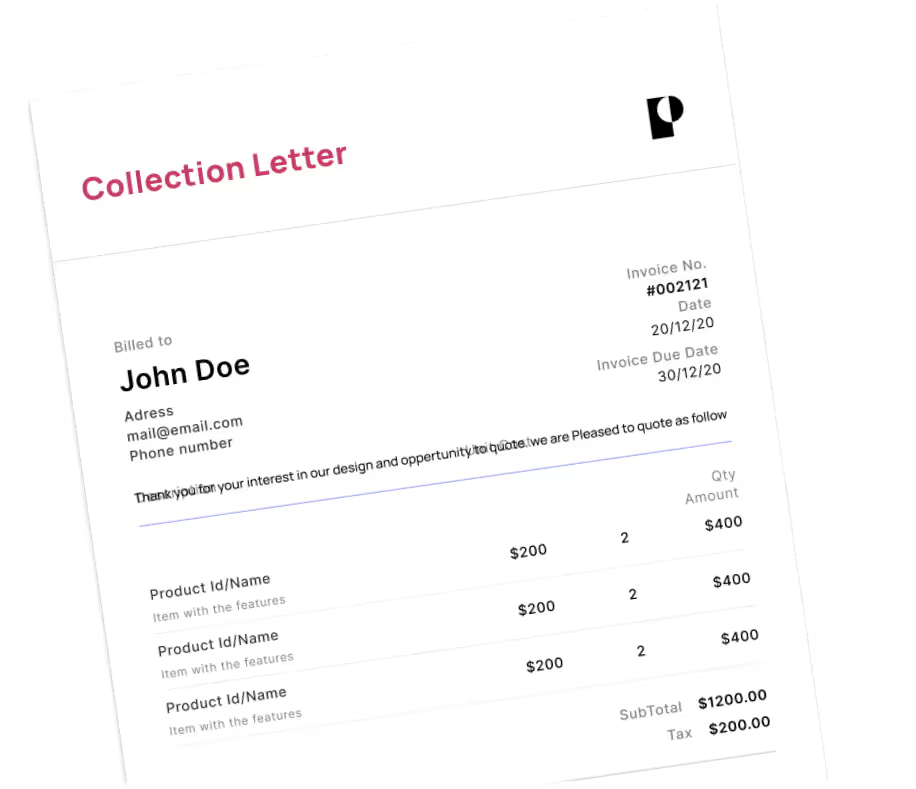
Need a debt collection agency in China? Your claims are handled by Ningbo Esteem Consulting (NB Esteem), our local partner for debt collection (zhai wu cui shou) in China, working with its lawyer team at Beijing Jingsh Law Firm and Grandall Law Firm (Ningbo offices), with nearly 20 years in cross-border collection and membership in LIC International. Submit your claim in minutes, track progress in real time, and pay only when your money is recovered.


Questions about your case?
Write to us, we reply by email.

Why choose Debitura for debt collection in China


How to start debt collection in China
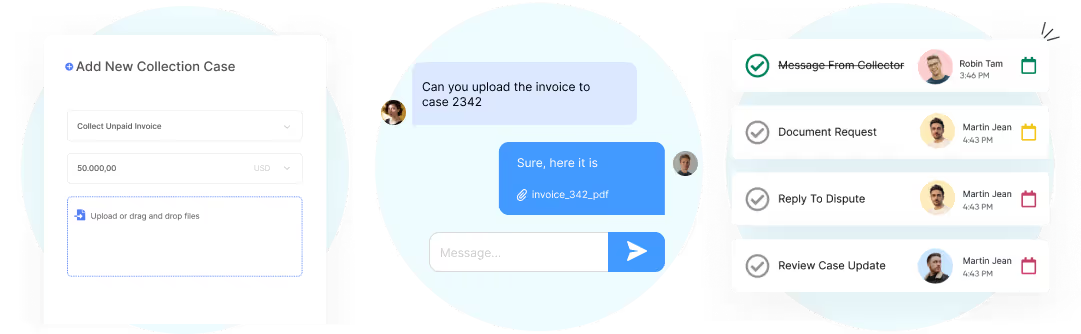
- Upload your claim: Enter debtor details and upload invoices in the dashboard. Takes under 2 minutes.
- NB Esteem takes over: its lawyer team checks your debtor in the company register, usually within about half an hour, then sends a written demand in Chinese on law-firm letterhead. Negotiation follows on WeChat, with calls only if your debtor agrees.
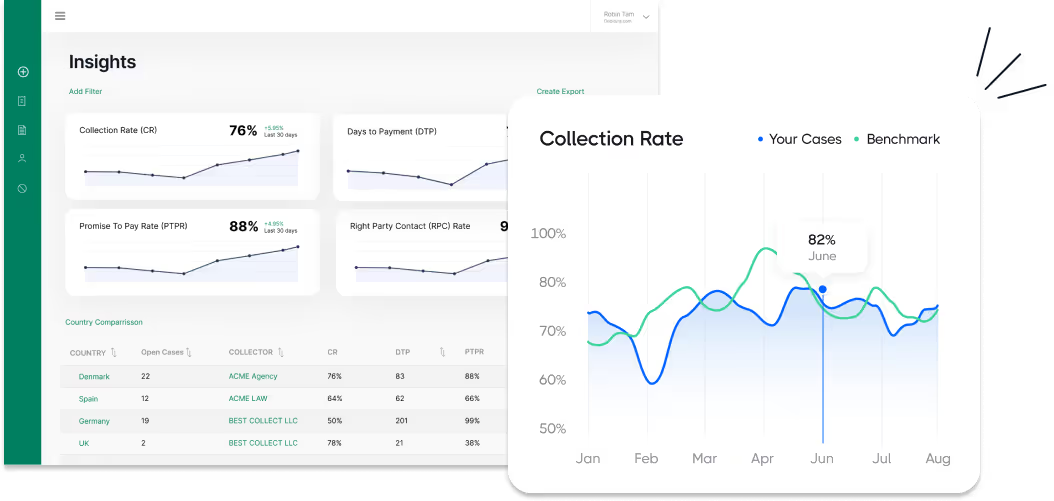
- Track and receive payment: Monitor progress in real time. When funds are recovered, you receive payment minus the success fee.
Already using accounting software or an ERP? Import by CSV or connect QuickBooks Online, Zoho Books, Stripe or KashFlow, or use Zapier, the REST API or our MCP server.
Transparent, success-based pricing
With Debitura you pay a success fee only when money is recovered. Pre-legal collection is No Cure, No Pay: a success fee deducted from recovered amounts, invoiced locally by your partner. Fees depend on the debtor's country, not yours.
- Debtors in Europe (EU, Iceland, Liechtenstein, Norway, the UK and Switzerland): success fees from 6% depending on claim size.
- Debtors in the rest of the world: success fees from 7.5% depending on claim size.
- Older claims: a surcharge applies for claims 12 to 24 months overdue and for claims older than 24 months.
- Legal action is optional: you approve a legal quote, with court costs stated separately, before any legal spend.
See the pricing page for the full fee schedule, or get an instant estimate when you upload a claim.
How does debt collection work in China?
Debt collection in China starts with an amicable phase handled locally by the lawyer team of Ningbo Esteem Consulting Co., Ltd.: a written demand on law-firm letterhead and negotiation, aimed at full payment or a written acknowledgement of the debt. Most undisputed claims are resolved at this stage. If the debtor still does not pay, escalation is never automatic; your partner assesses the legal route, and you approve a legal quote before any court or arbitration step.
The four steps from unpaid invoice to recovered cash
- Amicable collection: a written demand on law-firm letterhead and negotiation, handled locally by the lawyer team of Ningbo Esteem Consulting Co., Ltd. Most undisputed claims are resolved here, without going to court.
- Enforceable title: if the debtor still does not pay, your partner assesses the legal route (arbitration if your contract has a clause, otherwise court), and you approve a legal quote, with court costs stated separately, before anything proceeds.
- Enforcement: with a title, the people's courts can freeze and transfer bank deposits, withhold income, and seal up, auction or sell property until the claim is recovered.
- Insolvency: if the debtor cannot pay, your proof of claim is filed in the insolvency process, and any distributions are monitored on your behalf.
Every step is tracked in your dashboard, and nothing escalates without your approval. The full legal detail for China follows in the guide below.
Debt collection in China - the complete 2026 guide
Built for overseas and domestic creditors, in-house counsel and finance teams, this guide sets out how debt collection in China (mainland PRC) works end to end: the legal framework and courts, who does what, the limitation and interest rules, the routes to an enforceable outcome (arbitration, court action and the order for payment), enforcement by the people's courts, and corporate insolvency under the Enterprise Bankruptcy Law.
On this page:
Why you can trust this guide
Written from primary legal sources and reviewed by licensed local experts in this jurisdiction.
Questions or feedback? Email us at contact@debitura.com , we update this guide based on your input.
Debitura By the Numbers:
- 180 countries covered - each case handled by a local partner
- More than 5,000 businesses registered with Debitura
- 33 days median time to first payment on European cases
About the author
Written by Lars Holdgaard, Founder of Debitura (+10 years in global B2B debt recovery).

Contributing local experts:
Last updated:

Debt collection in China - quick answers
Debt collection in China, and debt recovery for foreign creditors in particular, runs on an amicable phase led by lawyers, court or arbitration proceedings, and a court-run enforcement system with strong pressure tools. The headline rules are below.
How much does debt collection cost in China?
Pre-legal collection is commonly success-based (No Cure, No Pay), so the amicable phase costs you nothing unless money is recovered. Court action adds a case-acceptance fee on a national sliding scale set by the Measures on the Payment of Litigation Costs (2007): RMB 50 up to RMB 10,000, then 2.5% falling to 0.5% above RMB 20 million, so a USD 50,000 claim pays about 1.9%, halved under the summary procedure. The unsuccessful party generally bears the litigation costs the court awards, and your partner quotes the fee for your claim value before you approve any legal step.
How long does debt collection take in China?
According to our partner's lawyer team, amicable collection usually takes one to four months, often one to two. Legal proceedings normally take one to two years: a contested claim runs through a first-instance trial with one right of appeal, and the ordinary summary procedure concludes within three months (extendable by one month). Once the court finds assets, a freeze can follow within weeks, and an auction takes another six to twelve months. The order-for-payment route is quick on paper (acceptance within five days, order within fifteen days, then fifteen days for the debtor to pay or object), but a single valid objection ends it.
What is the limitation period for a debt in China, and does it differ for consumers?
The general limitation period is three years and it applies to both commercial and consumer claims, running from the date the creditor knew or should have known of the debt and of the debtor's identity, with an absolute twenty-year long-stop (Civil Code of the PRC, article 188). Claims under an international sale-of-goods contract or a technology import or export contract have four years (Civil Code article 594), which covers most cross-border trade claims. Chinese law sets no separate consumer limitation period: article 188 sits in Book One of the Civil Code, the general provisions, and the Supreme People's Court's Interpretation on the General Part of the Civil Code (24 February 2022) confirms it is the default for all civil-rights claims, displaced only by a more specific statute and never by a business-versus-consumer distinction. The period is suspended during its last six months for the causes listed in article 194, and it restarts when the creditor demands performance, the debtor acknowledges the debt, or suit or arbitration is filed (article 195).
What interest can I charge on a Chinese debt?
Two separate mechanisms apply and should not be conflated. In private-lending cases (individual-to-individual and other non-institutional lending), courts protect contractual interest only up to four times the one-year Loan Prime Rate in force at contract formation, under Supreme People's Court provisions effective 20 August 2020; the one-year LPR stood at 3.00% per annum in September 2026, putting that cap at roughly 12.00% per annum. Ordinary commercial and trade debt instead relies on the contractual interest clause; without one, a seller can claim its loss from late payment at the one-year LPR plus 30% to 50%. After judgment, delayed-performance interest runs at the LPR and is doubled if the debtor still has not paid by the deadline the court sets.
| Topic | Rule |
|---|---|
| Limitation (commercial and consumer) | 3 years from knowledge (Civil Code art. 188); 4 years for international sale of goods and technology import/export (art. 594); 20-year long-stop. No consumer-specific period. |
| Order for payment | Basic people's court; order within 15 days; 15-day debtor objection window; a valid objection ends it. |
| Small claims | Below 50% of the province's average annual employee salary; not available in foreign-related cases, so closed to foreign creditors. |
| Court fee | Sliding scale: RMB 50, then 2.5% falling to 0.5%; about 1.9% on a USD 50,000 claim; halved in summary procedure. |
| Private-lending interest cap | 4x the one-year LPR (3.00% p.a. in September 2026, so approx. 12.00% p.a.). |
| Enforcement | People's courts freeze deposits, withhold income, and seal up, auction or sell property. |
What documents do I need to collect a debt in China?
Assemble the contract, the unpaid invoices and statement of account, proof of delivery or performance, and any written acknowledgement of the debt or negotiable instrument. A clear documentary record is what every court or arbitration route relies on, and a written acknowledgement also restarts the limitation period. Court proceedings run in Chinese only, so foreign-language documents need a Chinese translation at your cost. A foreign power of attorney is notarised and then apostilled: China joined the Apostille Convention on 7 November 2023, so consular legalisation is no longer needed.
Which route should my claim take in China?
Most claims start amicably: our partner's lawyer team sends a written demand on law-firm letterhead and negotiates. If that fails, a claim backed by a written arbitration clause goes to arbitration, and everything else to an ordinary first-instance action in the people's court. The order-for-payment procedure (zhifu ling) is available for a clear money debt owed by a debtor in mainland China, but a single valid objection ends it, so our partner rarely uses it. The small-claims procedure excludes foreign-related cases (Civil Procedure Law article 166), so it is closed to a foreign creditor.
Who does what in China debt collection?
Recovery in China involves licensed lawyers for the amicable phase and for court proceedings, and the people's courts for enforcement. Debitura is the platform that routes your claim and tracks it; the work in China is performed by the lawyer team of our local partner, Ningbo Esteem Consulting Co., Ltd., at Beijing Jingsh Law Firm and Grandall Law Firm (Ningbo offices).
Collection agencies in China
Debt-collection companies are banned in mainland China. A 2000 joint notice of the State Economic and Trade Commission, the Ministry of Public Security and the State Administration for Industry and Commerce ordered that no debt-collection company be registered and that companies collecting debts under names such as "consulting" lose their business licence. No national statute licenses collection agencies and there is no industry regulator, so third-party collection is done by licensed lawyers. Ningbo Esteem itself handles marketing and business development, which Chinese rules do not allow law firms to do directly; the collection work is done by its lawyers.
Lawyers in China
Lawyers (lushi) represent creditors in the amicable phase, in the order-for-payment procedure, in ordinary actions, in arbitration and in enforcement, and are governed by the Law on Lawyers of the PRC. For an overseas creditor, a local lawyer is the practical route into the court system, and demand letters issued on law-firm letterhead carry more weight in the amicable phase.
Courts and enforcement in China
Enforcement is carried out by the people's courts rather than by private bailiffs. The basic and intermediate people's courts may set up dedicated execution organs that locate assets and apply the statutory enforcement measures, and the same courts operate the Dishonest Judgment Debtor list that restricts a defaulting debtor's travel and spending.
Which laws and courts apply to debt collection in China?
Chinese debt recovery runs on a codified civil-code and civil-procedure system, enforced through a four-tier court hierarchy.
The civil court system in China
Ordinary first-instance civil cases are heard by the basic people's courts, with the intermediate people's courts, the higher people's courts and the Supreme People's Court above them. China operates a two-instance system, so a first-instance judgment can be appealed once and the second-instance judgment is final and enforceable. The order-for-payment procedure and the small-claims procedure are both handled at basic people's court level. Proceedings are conducted in Chinese, and a party that needs translation pays for it (Civil Procedure Law article 273).
Key legislation in China
- Civil Code of the PRC (adopted 28 May 2020, in force 1 January 2021): the substantive debt rules and the limitation regime (articles 188 and 594).
- Civil Procedure Law of the PRC: the order-for-payment procedure, the small-claims and summary procedures, and court enforcement. Amended on 24 December 2021 (in force 1 January 2022, which formalised the Small Claim Procedure) and again in 2023 (in force 1 January 2024, rewriting the foreign-related litigation chapter).
- Enterprise Bankruptcy Law of the PRC (2006, in force 1 June 2007): corporate reorganisation, conciliation and liquidation.
- Measures on the Payment of Litigation Costs (State Council, in force 1 April 2007): the court-fee scale.
Conduct rules and data protection in China
No national statute licenses or supervises debt-collection agencies in mainland China, and a 2000 joint notice banning debt-collection companies has not been repealed, so legitimate recovery runs through licensed lawyers and law firms. Collection conduct is bounded by criminal law: Criminal Law Amendment (XI), in force 1 March 2021, created a specific offence of collecting unlawful debt through threats, stalking or harassment, punishable by up to three years' imprisonment where the circumstances are serious. Handling a debtor's personal data must comply with the Personal Information Protection Law (PIPL), adopted on 20 August 2021 and in force since 1 November 2021, which is China's first comprehensive personal-data statute and reaches processing outside China.
Step 1 - How does amicable (pre-legal) debt collection work in China?
Pre-legal collection recovers an unpaid invoice without a lawsuit, through a formal demand and negotiation. China has no statutory pre-action dunning regime and no law requires a formal notice before suing, so the amicable phase is a commercial process aimed at full payment or a written acknowledgement of the debt. A written acknowledgement also restarts the limitation period under Civil Code article 195, which is why it is worth securing even when payment is deferred.
How our partner runs the amicable phase in China
Ningbo Esteem's lawyer team first checks a company debtor in the public company register, usually in about half an hour, or traces an individual through the address registered to the citizen ID, which takes half a day to a day. Under Chinese lawyers' practice rules the first official step is a written demand letter on law-firm letterhead rather than a phone call; follow-ups by email, SMS or further letters get firmer over two to three weeks and end with a final warning. If the debtor engages, negotiation moves to WeChat so everything is on record, calls happen only with the debtor's consent, and you approve every settlement. Settlement agreements usually include a CIETAC arbitration clause, so a debtor who breaches one also owes your legal fees. Claims below USD 5,000 get the basic steps only: a demand letter and one follow-up call. Amicable collection usually takes one to four months, often one to two.
| Stage | Action |
|---|---|
| Debtor check | Company register, or the citizen-ID address for an individual. |
| Formal demand | Written demand on law-firm letterhead: the sum, a deadline and the intent to escalate. |
| Negotiation | On WeChat, on record; settlement or instalment plan, ideally with a CIETAC arbitration clause. |
| Escalation | Arbitration if the contract has a clause, otherwise an ordinary action in the people's court. |
Conduct rules in the amicable phase in China
Debt-collection companies are banned in mainland China under a 2000 joint notice, which is why recovery is run by licensed lawyers. The conduct boundary is criminal rather than administrative: Criminal Law Amendment (XI), in force 1 March 2021, makes it an offence to collect unlawful debt by threats, stalking or harassment, with up to three years' imprisonment where the circumstances are serious. A demand-letter process run through a law firm keeps the pressure lawful and preserves the evidence you need if the claim escalates.
When to escalate to court in China
Escalate when the demand lapses, the debtor disputes without substance, or the limitation period approaches. A court win is not the same as payment: if the debtor has no assets or goes bankrupt the judgment can be worth little, which is why a negotiated settlement is often the best outcome.
Step 2 - How do you obtain an enforceable title in China?
To enforce a debt through the courts you need an enforceable outcome: a court judgment, an arbitral award or, for clear undisputed claims, a payment order.
The order-for-payment procedure (zhifu ling)
The creditor applies to the basic people's court with jurisdiction, provided the money claim is clear, there is no other debt dispute between the parties, and the order can be served on the debtor in mainland China. The court tells the creditor within five days whether it accepts the application; if it does and the rights and obligations are clear and lawful, it issues the order within fifteen days. The debtor then has fifteen days from receipt to pay or file a written objection. If the debtor does neither, the creditor may apply for enforcement. There is no monetary threshold for this route. A valid written objection ends the procedure; an objection that only pleads inability to pay or asks for more time does not. Because a single objection is enough and cross-border applications are hard to bring, our partner's lawyers rarely use this route.
Ordinary actions, arbitration and small claims
After an objection, or for any disputed claim, the creditor brings an ordinary action, heard at first instance with one right of appeal. Where the contract has a written arbitration clause, the claim goes to arbitration instead: one hearing, no appeal on the merits, and a court can set an award aside only for serious procedural defects. The ordinary Summary Procedure, for simple facts and clear rights before a single judge, concludes within three months, extendable by one. The Small Claim Procedure, for claims below 50% of the relevant province's average annual employee salary and decided at a single, final instance within two months, was formalised by the 24 December 2021 amendment to the Civil Procedure Law; it excludes foreign-related cases (article 166), so a foreign creditor cannot use it.
Determining the appropriate court in China
Jurisdiction generally follows the defendant's domicile or the place of performance, subject to any valid jurisdiction or arbitration agreement. The claim must be brought within the limitation period: three years, or four years for an international sale-of-goods or technology import or export contract (Civil Code article 594).
More on court proceedings in China
The two-instance system
China operates a two-instance system: a first-instance judgment can be appealed once to the next court up, and the second-instance judgment is final and enforceable. A party can still apply for a retrial at a higher court, which reviews only whether there was an error. The Small Claim Procedure is the exception, since it is decided at a single, final instance.
Citing Civil Procedure Law article numbers
The Supreme People's Court's official English text of the Civil Procedure Law has not been updated past an earlier article-numbering scheme, and the consolidated current English text is not freely published. The procedures set out above are stable current law; where an exact current article number matters for a filing, confirm it with your local counsel rather than relying on an English translation online.
Step 3 - How does debt enforcement work in China?
Enforcement is carried out by the people's courts once you hold an enforceable outcome. The court applies the measures that match the debtor's known assets, and the creditor does not deal with private bailiffs.
Ways to enforce a claim in China
- Bank deposits: the court can inquire into, freeze and transfer the debtor's bank deposits, within the scope of the obligation.
- Income: the court can withhold or withdraw part of the debtor's income, leaving the necessary living expenses.
- Property: the court can seal up, distrain, freeze, auction or sell off the debtor's property, leaving the necessities of life.
- Statutory penalty interest: a debtor who has not paid by the deadline set in the judgment owes double interest on the delayed debt.
- Pressure tools: the courts run a public Dishonest Judgment Debtor list under Supreme People's Court provisions of 1 July 2013 (amended 2017), published through the China Enforcement Information Online portal. Listing carries travel and high-consumption restrictions and adverse credit reporting, and it is often what moves a solvent but unwilling debtor to pay.
The enforcement process in China
The creditor applies to the court with the enforceable outcome, the court investigates and attaches assets, and proceeds are applied to principal, interest and costs, with any surplus returned to the debtor. Because enforcement runs entirely through the court, asset tracing and the choice of measure are decisions the court takes on the creditor's application, so a well-evidenced application naming known bank relationships or assets moves faster.
Step 4 - How do insolvency procedures affect debt recovery in China?
Where a company debtor cannot pay, insolvency under the Enterprise Bankruptcy Law (2006) becomes the collective route, and individual enforcement generally stops once proceedings open. The law provides three paths: reorganization, conciliation, and bankruptcy liquidation.
Opening insolvency and lodging your claim
Proceedings are opened by the court on the application of the debtor or a creditor, and a court-appointed administrator (guanli ren) takes control of the estate. Creditors declare their claims to the administrator within the period fixed by the court in its acceptance announcement.
Outcomes and priority
Under the statutory priority (article 113), after bankruptcy expenses and estate debts, assets pay first employee wages and specified employee entitlements, then outstanding social-insurance premiums and taxes, and finally ordinary bankruptcy claims. Unsecured trade creditors rank in the last tier and often recover only part of the debt.
The insolvency process for creditors in China
Declare your claim to the administrator by the deadline, with the contract, invoices and statement of account; monitor the creditors' meetings and any distribution. Note that China has no nationwide personal-bankruptcy law: the only personal-insolvency regime is the Shenzhen pilot, in force since 1 March 2021.
Fees, interest and who pays what in China
- Our fee: success-based, No Cure, No Pay (see pricing).
- Court and enforcement fees: statutory court fees apply only if the case escalates to legal action. The case-acceptance fee follows a national sliding scale (see below); the claimant prepays it and the unsuccessful party generally bears it.
- Statutory debtor items: interest runs at the rate agreed in the contract, subject to the caps described below; once a judgment is unpaid past the court's deadline, delayed-performance interest is charged at the Loan Prime Rate and doubled as a statutory penalty.
- Lawyers' fees: recoverable from the debtor only on specific grounds, mainly a clause in your contract, a guaranteed debt, IP cases or an arbitral award; otherwise each side pays its own.
- Who keeps what: recovered principal is yours; interest and costs follow the contract, the statute and the court's order.
Court fees in China
The case-acceptance fee for a money claim is set by the State Council's Measures on the Payment of Litigation Costs (in force 1 April 2007) on a sliding scale: RMB 50 up to RMB 10,000, then 2.5% on the part up to RMB 100,000, falling step by step to 0.5% on the part above RMB 20 million. A USD 50,000 claim (about RMB 336,000) pays roughly RMB 6,300, about 1.9% of the claim, and the fee is halved under the summary procedure. An asset-preservation application costs a separate fee capped at RMB 5,000.
Interest caps in China
Chinese law treats private lending and ordinary commercial debt differently. In private-lending cases, courts protect contractual interest only up to four times the one-year Loan Prime Rate in force when the contract was made, under Supreme People's Court provisions effective 20 August 2020. The one-year LPR stood at 3.00% per annum in September 2026, so that ceiling was around 12.00% per annum. Ordinary commercial and trade debt is not subject to that cap: it relies on the contractual interest clause, so state the rate clearly in the contract. Without a clause, a seller can still claim its loss from late payment, which courts calculate at the one-year LPR plus 30% to 50% (Supreme People's Court Interpretation on sales contracts, article 18).
Cross-border debt collection in China
A foreign court judgment is recognised and enforced in China on the basis of a treaty or the principle of reciprocity under the Civil Procedure Law, and the 2023 amendment, in force since 1 January 2024, substantially rewrote the foreign-related civil litigation chapter, including the jurisdiction and recognition rules for foreign judgments. US judgments have been recognised on reciprocity since 2017 (Liu Li v Tao Li, Wuhan Intermediate People's Court), and the Supreme People's Court's 2021 conference summary on foreign-related commercial trials widened the reciprocity test; that guidance does not cover IP judgments. Recognition is a separate court case, and enforcement follows only once the judgment is recognised. China signed the Hague Choice of Court Agreements Convention (2005) on 12 September 2017 but has not ratified it, so it does not yet provide a route. Foreign arbitral awards are generally easier to enforce than foreign court judgments, because the New York Convention (1958) has been in force for China since 1987, subject to the standard reciprocity and commercial reservations. For a cross-border supply contract with a Chinese counterparty, a well-drafted arbitration clause is therefore often the stronger enforcement position.
Partners in our network
These firms are partners in our network for this country. Open a profile to learn more about each one. If court action is needed on your case, your partner sends a quote on the platform; nothing starts until you accept it.
- Verified specialists
- Nothing starts until you accept the quote
- Fair, pre-negotiated rates

Tianjin Bozhuan Law Firm is a premier law firm in Tianjin offering effective Debt Collection services in China, positioning itself as the go-to partner for debt recovery, founded in 2017, with accolades from the China Ministry of Justice and membership in the Tianjin Lawyers Association.



Ningbo Esteem Consulting Co., Ltd. (NB Esteem) is a Debitura partner in China: a Ningbo company run by Chinese lawyers, whose lawyer team at Beijing Jingsh Law Firm and Grandall Law Firm (Ningbo offices) has handled cross-border debt collection for nearly 20 years. It offers No Cure No Pay pre-legal collection under Debitura's standard terms, in English and Chinese, and is a full member of the League International for Creditors (LIC).

Aurora Compass Advisory LLC is a premier debt recovery agency in Sacramento offering effective Debt Collection services in the United States, positioning itself as the go-to partner with a strong network and expertise since 2025, serving clients with precision and professionalism.
Wukun (Kevin) Ke is a seasoned litigator and debt collection attorney based in Shenzhen City, practicing at Haipai Law Firm (Shenzhen). With over a decade of experience and an LL.M. from the University of Manchester, he specializes in dispute resolution, cross-border matters, and debt recovery across China.

Haipai Law Firm is a premier law firm in Shenzhen offering effective Debt Collection services in China, established in 2002, with branches in Hong Kong and Taipei, and recognized as a World Trade Organization Affairs Workstation by the Shenzhen government.
China Commercial Law Firm is a premier law firm in Shanghai offering effective Debt Collection services in China, positioning itself as the go-to partner for debt recovery with accolades such as the 2022 Chambers Best Regional Law Firm and membership in the All China Lawyers Association, serving clients since 1993.
Frequently Asked Questions
Explore our most common FAQs below, or reach out directly at contact@debitura.com if you need help with a specific case.