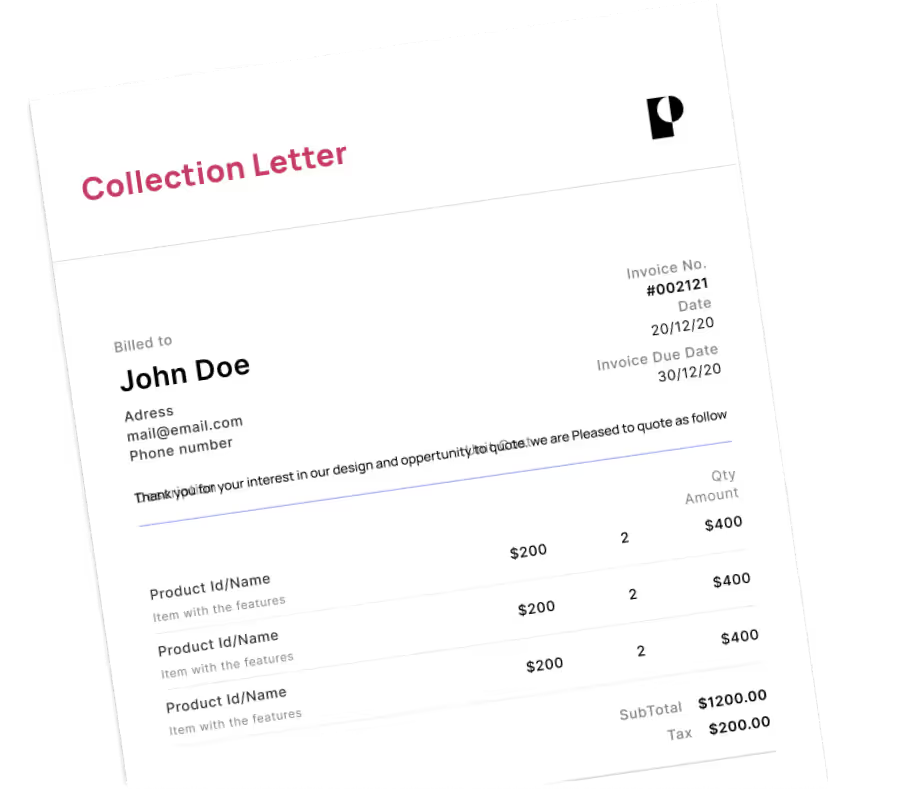
Debt Collection in Egypt: Fast, Compliant, and Risk-Free
Our 2026 guide for DIY debt collection in Egypt follows below, or upload your claim directly through Debitura's platform for swift recovery with zero upfront fees.


Obter aconselhamento especializado grátis
Resposta de um especialista em 24 horas.
Porquê escolher a Debitura para a cobrança de dívidas no Egito
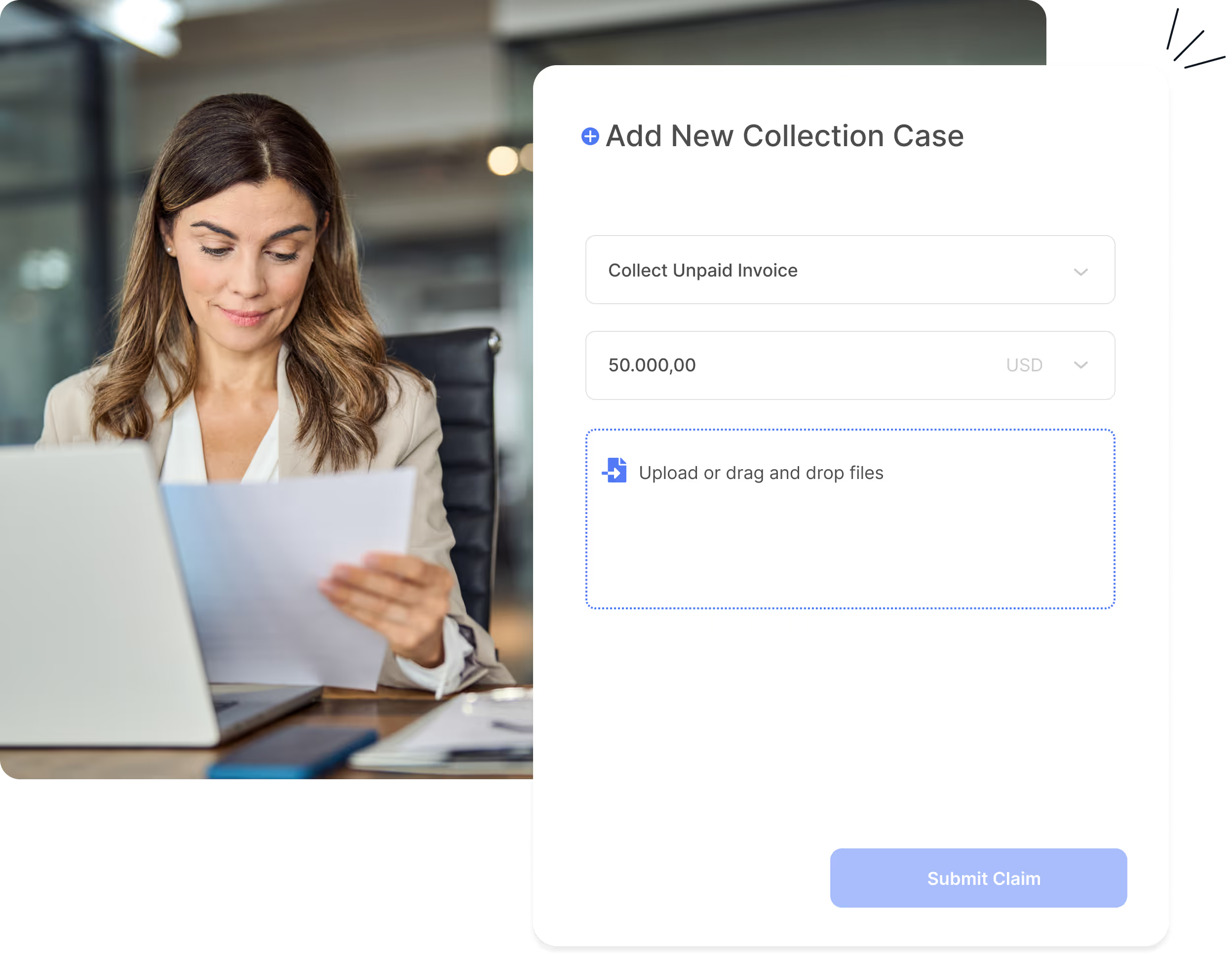
Precisa de uma Empresa de Cobrança de Dívidas no Egito? Comece Hoje Sem Riscos
Facing challenges with debt collection in Egypt? Debitura connects you directly to RIME Information Bureau Ltd, our licensed partner for Egypt, within 24 hours - fully compliant with Egyptian laws and business practices.
- Sem Ganho, Sem Taxa: Zero custos iniciais; as comissões de sucesso aplicam-se apenas em caso de recuperação bem-sucedida.
- Fast, Coordinated Action: Prompt handling aligned with Egypt's amicable recovery procedures.
- Regional Expertise: A specialist recovery team with experience across Egypt and the wider MENA region.
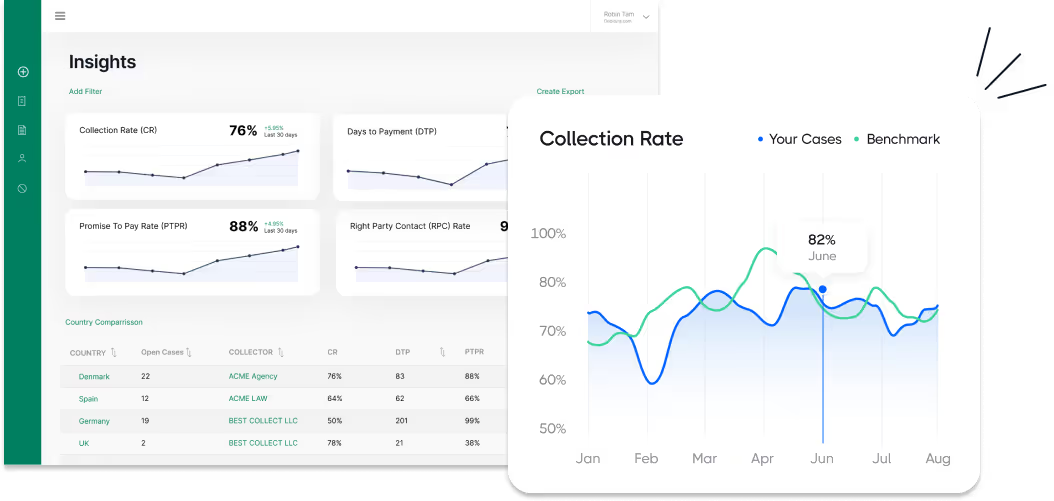
- Atualizações em Tempo Real: Acompanhe seus processos sem esforço em nosso painel ao vivo.

Comece a recuperar as suas reclamações no Egito em minutos
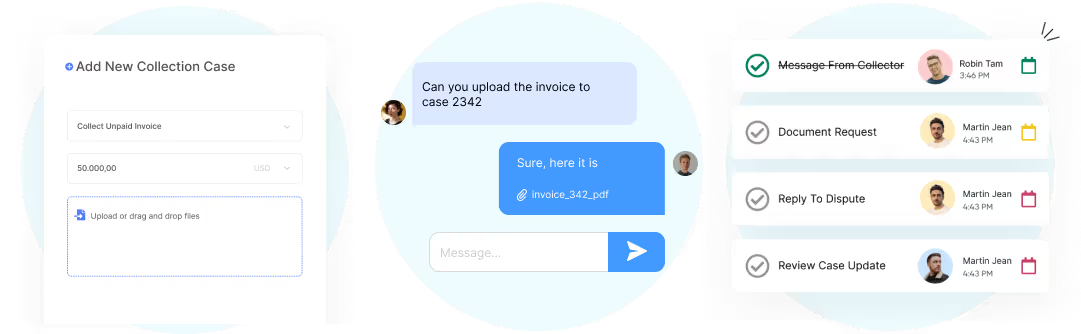
- Envie a sua reclamação: Carregue a sua fatura não paga através do painel de controlo da Debitura, da API REST, ou de uma integração ERP plug-and-play como Xero ou QuickBooks. Adicione documentos de apoio em poucos cliques, sem burocracia e sem taxas de configuração.
- Collection begins: Your case is assigned to RIME Information Bureau Ltd, who starts amicable contact with the debtor on your behalf. If court action is ever needed later, you choose from fixed-price legal quotes before anything proceeds, so nothing is spent without your consent.
- Acompanhe e seja pago: Siga cada atualização em tempo real no seu painel de controlo, desde o primeiro lembrete até ao pagamento final, com uma notificação em cada etapa. Os fundos recuperados são-lhe remetidos assim que são liquidados, e só paga em caso de sucesso.

Preços transparentes e baseados no sucesso
Com a Debitura, você só paga se tivermos sucesso. A cobrança pré-judicial funciona no modelo 'sem sucesso, sem honorários': uma Comissão de sucesso é deduzida dos valores recuperados, faturada localmente pelo seu parceiro. As taxas dependem do país do devedor, não do seu.
- Devedores na Europa (UE, Islândia, Liechtenstein, Noruega, Reino Unido e Suíça): Comissões de sucesso a partir de 6%, dependendo do valor do crédito.
- Devedores no resto do mundo: Comissões de sucesso a partir de 7,5%, dependendo do valor do crédito.
- Créditos mais antigos: uma sobretaxa é aplicada para créditos com 12 a 24 meses de atraso e para créditos com mais de 24 meses.
- Ação judicial é opcional: você aprova orçamentos de preço fixo antes de qualquer gasto judicial.
Consulte a página de preços para a tabela completa de taxas, ou obtenha uma estimativa instantânea ao enviar um pedido de cobrança.
Como funciona a cobrança de dívidas no Egito?
Debt collection in Egypt begins with an amicable phase run by RIME Information Bureau Ltd, Debitura's exclusive partner for Egypt: a Cyprus-domiciled specialist covering Egypt and the wider MENA region (RIME is also Algeria's exclusive partner under the same cross-border model), rather than a firm with its own Cairo office. The team sends formal reminders and a demand letter aimed at full payment or a written instalment agreement. Most straightforward claims resolve at this stage. If the debtor still does not pay, escalation to court is a separate step you approve, never automatic.
Os quatro passos da fatura não paga ao dinheiro recuperado
- Passo 1 - Cobrança amigável: lembretes, uma demanda formal de pagamento e negociação, conduzidos localmente por um parceiro local e licenciado. A maioria das reclamações incontestadas é resolvida nesta fase, sem ir a tribunal.
- Etapa 2 - Título executivo: se o devedor ainda não pagar, o seu parceiro avalia a via judicial para obter um título executivo e você aprova um orçamento de preço fixo antes que qualquer procedimento avance.
- Etapa 3 - Execução: com um título judicial, a autoridade de execução competente pode penhorar salários, fundos bancários e outros bens até que o pedido de cobrança seja recuperado.
- Etapa 4 - Insolvência: se o devedor se revelar insolvente, a sua prova de crédito é apresentada e quaisquer distribuições são monitorizadas em seu nome.
Cada passo é rastreado no seu painel de controlo, e nada escala sem a sua aprovação. Todos os detalhes legais para o Egito - prazos, custos, tribunais e execução - seguem no guia abaixo.

Cobrança de dívidas no Egito - o guia completo de 2026
This guide covers Egypt's debt-recovery process: the applicable law under the Civil Code and Commercial Code, the ordinary courts and specialised Economic Courts that hear claims, and the path from amicable contact to enforcement under the Code of Civil and Commercial Procedure (Law No. 13 of 1968).
Nesta página:
Por que você pode confiar neste guia
At Debitura, we uphold the highest standards of impartiality and precision to bring you comprehensive guides on international debt collection. Every guide is written from primary legal sources and reviewed by licensed local experts in the jurisdiction it covers.
Perguntas ou feedback? Envie-nos um e-mail para contact@debitura.com , atualizamos este guia com base na sua contribuição.
Debitura em Números:
- 767 licensed partners - collection agencies and law firms in our network
- 180 countries covered - with cases handled in 174 of them
- 5,306 businesses registered with Debitura
- 33 days median time to first payment on European cases
Liderado por especialistas, validado localmente
Escrito por Lars Holdgaard, Fundador da Debitura (+10 anos em recuperação global de dívidas B2B). Cada página é revista por advogados locais de topo para garantir a precisão legal e passos práticos que pode utilizar.

Especialistas locais contribuintes:
Última atualização:

Recuperação de crédito no Egito - respostas rápidas
Quais são os Custos da recuperação de crédito no Egito?
Debitura's fee is success-based, No Cure, No Pay (see pricing). If a claim escalates, attorney fees, court costs and bailiff execution costs apply, and statutory interest on a commercial debt follows the Central Bank of Egypt's policy rate under Commercial Code Article 50(3), capped at the amount of the principal debt under Article 64. Court filing fees and bailiff execution costs are not published in a single consolidated schedule and vary with claim value; your legal representative confirms current costs before any court step goes ahead.
Quanto tempo leva a recuperação de crédito no Egito?
Timelines depend on how quickly the debtor engages during the amicable phase; if a claim escalates, litigation timelines depend on the court's caseload and the case's complexity. As historical context, the World Bank's last published Doing Business report (2020, the series was discontinued in 2021) ranked Egypt 166th of 190 economies for Enforcing Contracts, with an average of 1,010 days and a cost of 26.2% of the claim value - a past benchmark, not a current guarantee.
Qual é o prazo de prescrição e a taxa de juros para créditos de dívida no Egito?
Under Commercial Code Article 68, obligations between traders (B2B) prescribe seven years from the date they fall due, and a final court judgment on such an obligation prescribes after ten years. A separate, shorter prescription applies to liability-type (tort) claims arising from a commercial relationship: Article 67(5) sets three years from when the harmed party learns of the damage, capped at fifteen years from the date of the wrongful act - a distinct rule from the seven-year contractual prescription above. Consumer-facing and other civil claims fall under a separate, general Civil Code limitation period; confirm the exact figure with local counsel before relying on it. Interest on commercial debts tracks the Central Bank of Egypt's rate and is capped at the principal amount (Articles 50(3) and 64).
Quais documentos são necessários para cobrar uma dívida no Egito?
Egyptian courts expect clear documentary evidence: the underlying contract, signed invoices or delivery receipts, and a formal notice (Inzar) to the debtor, typically issued by an Egyptian attorney before or alongside filing a claim. Where the underlying deal involved a promissory note or a post-dated cheque, these commercial instruments strengthen the claim further.
Qual tribunal lida com ações de recuperação de crédito no Egito?
Commercial and financial disputes are often routed to the specialised Economic Courts (established under Law No. 120 of 2008, amended by Law No. 156 of 2024), while other civil claims go through the ordinary court system; claim size and type determine which tier hears a case, so confirm the current threshold before filing. Within the ordinary system, the Courts of First Instance include smaller-claims circuits for lower-value civil disputes, though the exact monetary cut-off between circuits is not publicly confirmed.
What happens if my debtor is insolvent in Egypt?
As historical context, the World Bank's final Doing Business report (2020) ranked Egypt 104th of 190 economies for Resolving Insolvency, with an average process length of 2.5 years, a cost of 22.0% of the estate, and a recovery rate of 23.3 cents on the dollar. Egypt's Restructuring, Preventive Composition and Bankruptcy Law (Law No. 11 of 2018) now gives a distressed debtor a restructuring or preventive-composition route through the Economic Courts before full bankruptcy; see Step 4 below for how this affects your claim.
| Fato chave | Egito |
|---|---|
| B2B commercial limitation period | 7 years from due date; judgment prescribes after 10 years (Commercial Code Art. 68) |
| Liability/tort claim prescription | 3 years from discovery of harm, capped at 15 years from the act (Commercial Code Art. 67(5)) |
| Interest on commercial debts | Central Bank of Egypt policy rate; capped at the principal amount (Commercial Code Arts. 50(3), 64) |
| Via de Processo comercial | Economic Courts (Law 120/2008, amended by Law 156/2024) |
| Enforcing Contracts (World Bank, 2020, historical) | Rank 166/190; 1,010 days; 26.2% of claim value |
| Resolving Insolvency (World Bank, 2020, historical) | Rank 104/190; 2.5 years; 22.0% of estate; 23.3¢/$ recovery |
Quem faz o quê na recuperação de crédito no Egito?
Debt recovery in Egypt runs through a mix of specialist recovery partners, lawyers, the court system and, for insolvency matters, the courts rather than a financial regulator.
Debitura's partner in Egypt
A Debitura case for Egypt is handled by RIME Information Bureau Ltd, our exclusive partner for the market: a Cyprus-domiciled specialist covering Egypt and the wider MENA region. RIME manages amicable contact with the debtor and coordinates any escalation to court.
Courts, including the Economic Courts
Commercial and financial disputes are often heard by the specialised Economic Courts (Law No. 120 of 2008, amended by Law No. 156 of 2024), while other civil matters proceed through the ordinary Courts of First Instance, Courts of Appeal and the Court of Cassation.
Advogados
Lawyers draft the formal notice (Inzar), represent creditors in negotiations and in court, and are required for legal representation in ordinary proceedings under the Code of Civil and Commercial Procedure (Law No. 13 of 1968).
The Financial Regulatory Authority (FRA)
Egypt's FRA regulates non-bank financial markets, covering the capital market, futures exchanges, insurance, mortgage finance, financial leasing, factoring and securitisation, but its remit does not extend to bankruptcy or insolvency administration; insolvency cases run through the courts under Law No. 11 of 2018.
The Consumer Protection Authority
Created under Title 3 of the Consumer Protection Law (Law No. 181 of 2018), this authority investigates consumer complaints, can file civil suits, and can impose precautionary measures such as suspending the sale of a product pending a court decision. It prohibits misleading behaviour by suppliers and voids contract clauses that attempt to bypass a supplier's duties, but it has no debt-collection-specific enforcement role and applies only where the debtor is a private consumer.
No dedicated debt-collection regulator
No Egypt-specific statute equivalent to an EU-style Fair Debt Collection Practices Act was found. Amicable-phase conduct instead rests on general Civil Code good-faith principles, together with the Consumer Protection Law's misleading-practice ban where the debtor is a private consumer rather than a business.
Quais leis e tribunais se aplicam à recuperação de crédito no Egito?
Debt collection in Egypt sits within a civil-law system built on the Civil Code and the Commercial Code, with disputes heard by a combination of ordinary and specialised courts.
Egypt's civil court structure
Debt claims are heard through a tiered court system: Courts of First Instance handle initial civil and commercial cases; Courts of Appeal review lower-court decisions; the Court of Cassation is the highest court for civil matters. The Courts of First Instance also include smaller-claims circuits for lower-value civil matters, though the exact monetary threshold separating these tiers is not publicly confirmed. Specialised Economic Courts (established under Law No. 120 of 2008, amended by Law No. 156 of 2024, which entered into force 11 July 2024) handle company, investment, banking, capital-markets and other commercial disputes, including many debt claims. Claim size and type determine which tier a case is heard in; confirm the current thresholds before filing.
Key legislation governing debt collection in Egypt
The Civil Code (Law No. 131 of 1948, promulgated 16 July 1948 and in force from 15 October 1949) sets the general framework for contractual obligations, torts and remedies. The Commercial Code (Law No. 17 of 1999, in force since 1 October 1999) governs commercial transactions, including the limitation period, interest rules and prescription of judgments between traders. It also sets a separate, shorter prescription for liability-type (tort) claims: three years from when the harmed party learns of the damage, capped at fifteen years from the wrongful act (Article 67(5)), distinct from the seven-year rule for ordinary trader obligations (Article 68). The Code of Civil and Commercial Procedure (Law No. 13 of 1968, issued 7 May 1968) governs litigation and the enforcement of judgments.
Company and investment legislation
Many commercial debtors operate as companies formed under the Companies Law (Law No. 159 of 1981) or, where foreign investment is involved, under the Investment Law (Law No. 72 of 2017). These statutes govern corporate form and investment incentives rather than debt collection itself, but they sit behind the corporate debtors a creditor is most likely to pursue.
Defesa do consumidor e proteção de dados
The Consumer Protection Law (Law No. 181 of 2018) established a Consumer Protection Authority, which can investigate complaints, take legal action and impose precautionary measures. It does not contain debt-collection-specific conduct rules; general consumer-protection principles apply, but no dedicated collections code was found in the primary sources reviewed.
Passo 1 - Como funciona a recuperação de crédito amigável (pré-legal) no Egito?
In Egypt, amicable recovery is the standard first step: it is faster, cheaper and preserves the business relationship, before any legal proceedings under the Civil and Commercial Procedures Law become necessary.
How amicable debt collection works in Egypt
Formal notice (Inzar): the process typically opens with a formal Arabic-language notice, drafted by an Egyptian attorney, setting out the amount owed and a deadline to pay.
Negotiation: your partner, RIME Information Bureau Ltd, pursues direct contact with the debtor to agree full payment or a written instalment plan.
Commercial instruments: where the underlying relationship involved a promissory note or post-dated cheque, these instruments can support the negotiation and, if unresolved, the later legal route.
Conduct standard: no Egypt-specific debt-collection-conduct statute exists; amicable contact instead operates under general Civil Code good-faith principles and, where the debtor is a private consumer rather than a business, the Consumer Protection Law's ban on misleading practices.
Escalation: if the debtor still does not respond or pay, the case is assessed for the legal route; you approve a fixed-price quote before anything proceeds, so escalation is never automatic.
| Typical Debitura workflow | What happens |
|---|---|
| Day 0 | Claim submitted; case assigned to RIME Information Bureau Ltd |
| Day 0-7 | Formal Inzar notice sent to the debtor |
| Day 7-30 | Negotiation window; debtor responds or a payment plan is agreed |
| Dia 30-60 | Follow-up and, where needed, a further demand |
| Dia 60-90 | If still unpaid, the case is assessed for the legal route and you receive a fixed-price quote |
These stages describe Debitura's typical workflow rather than a statutory deadline; actual timing depends on the debtor's response.
Passo 2 - Como se obtém um título executivo no Egito?
If amicable collection does not resolve the claim, the next step is a court judgment (an enforceable title) under the Code of Civil and Commercial Procedure (Law No. 13 of 1968).
Which court hears the claim
Commercial and financial disputes are often routed to the specialised Economic Courts (Law No. 120 of 2008, amended by Law No. 156 of 2024), while other civil claims proceed through the ordinary Courts of First Instance. Claim size and type determine which tier hears a case; confirm the current threshold before filing rather than assuming a fixed cut-off. Within the ordinary courts, lower-value civil claims may fall to smaller-claims circuits inside the Courts of First Instance, though the specific monetary cut-off is not publicly confirmed.
What the process looks like
The creditor files a claim supported by documentary evidence (the underlying contract, invoices or delivery receipts, and the formal notice already sent to the debtor). The court holds hearings, and legal representation is generally required. Once satisfied, the court issues a judgment ordering the debtor to pay.
Choosing the right legal basis
A straightforward unpaid commercial invoice prescribes under the Commercial Code's seven-year rule for obligations between traders (Article 68). Where the claim instead rests on a liability or tort theory arising from the same commercial relationship, a separate three-year prescription applies, capped at fifteen years from the wrongful act (Article 67(5)) - a distinction your legal representative should confirm before filing.
Mais sobre processos judiciais no Egito
Egypt's judicial tradition
Egypt's civil procedure reflects a civil-law tradition, and cases can move from the Court of First Instance through the Courts of Appeal up to the Court of Cassation, Egypt's highest civil court, if a party appeals.
Practical considerations
As illustrative, order-of-magnitude context, the World Bank's final Doing Business report (2020, before the series was discontinued in 2021) put the average time to obtain and enforce a judgment through Egypt's courts at 1,010 days, at a cost of 26.2% of the claim's value - a historical benchmark, not a guarantee for any individual case. Given the potential length of Egyptian court proceedings, creditors should keep clear records of every interaction and rely on experienced local legal representation to manage the process end to end. Once a judgment is issued, it becomes the enforceable title that carries the case into Step 3.
Passo 3 - Como funciona a execução de dívidas no Egito?
Once a court issues a final judgment, the creditor can move to enforcement under the Code of Civil and Commercial Procedure (Law No. 13 of 1968, issued 7 May 1968).
The general enforcement process
The judgment creditor applies to an execution (enforcement) judge at the Court of First Instance, who directs a court bailiff to carry out enforcement measures against the debtor. Egyptian legal practice refers to this court-appointed bailiff by the transliterated term mohdir, the officer responsible for formally serving judgments and carrying out enforcement measures on the ground. The bailiff formally serves the judgment on the debtor before any seizure step proceeds, giving the debtor an opportunity to comply voluntarily.
- Bailiff-led execution: the mohdir serves the judgment and carries out enforcement steps such as asset seizure and wage garnishment.
- Asset seizure: movable and immovable assets can be identified, seized and sold, typically through public auction, to satisfy the debt.
- Wage garnishment: a portion of the debtor's income can be redirected to the creditor, subject to protections for the debtor's basic needs.
- Debtor protections: debtors can contest enforcement measures before the execution judge, and certain essential assets are protected from seizure.
Working with your legal representative
As historical, order-of-magnitude context, the World Bank's final Doing Business report (2020, discontinued in 2021) put the average time to enforce a contract through Egypt's courts, including this enforcement stage, at 1,010 days, at a cost of 26.2% of the claim's value - a pre-2021 benchmark, not a guarantee for any individual case today. Because enforcement is a court-supervised process, creditors typically instruct a local attorney to liaise with the execution judge and mohdir on their behalf, track each enforcement step, and respond to any debtor challenge. Exact enforcement timelines and fees are not standardised in the sources reviewed for this guide; confirm current figures with your legal representative once a case reaches this stage.
Passo 4 - Como os procedimentos de insolvência afetam a recuperação de dívidas no Egito?
Insolvency in Egypt is governed by the Restructuring, Preventive Composition and Bankruptcy Law (Law No. 11 of 2018), which replaced the earlier Commercial Code bankruptcy provisions with a modernised framework built around restructuring and preventive composition ahead of full bankruptcy.
How the framework is structured
The 2018 law gives a distressed debtor more than one route through the Economic Courts: a restructuring track and a preventive-composition track, both intended to keep a viable business operating and its creditors better off than an immediate liquidation would leave them. Liquidation remains available as a later stage where restructuring or composition is not possible or does not succeed. Insolvency is not administered by Egypt's Financial Regulatory Authority (FRA), whose remit covers non-bank financial-market segments such as capital markets, insurance and leasing rather than bankruptcy administration; Law No. 11 of 2018 proceedings instead run entirely through the court system.
Filing thresholds, the exact priority order between creditor classes, and discharge timelines are not fully documented in the primary sources reviewed for this guide; confirm current detail with local insolvency counsel before relying on it rather than assuming a fixed figure.
Which businesses this applies to
Distressed debtors are commonly companies formed under the Companies Law (Law No. 159 of 1981) or, where foreign investment is involved, operating under the Investment Law (Law No. 72 of 2017). Law No. 11 of 2018 governs the bankruptcy and restructuring process itself rather than corporate form, so a debtor's company type does not change which insolvency track applies.
What this means for creditors
If your debtor enters an insolvency proceeding, your claim moves into that collective process rather than being pursued through individual enforcement against the debtor's assets. In practice this means submitting proof of the claim within the process the court has opened, and any recovery then depends on the debtor's remaining assets, the track chosen (restructuring, composition or liquidation), and the proceeding's outcome rather than on individual creditor action.
As historical context, the World Bank's last published Doing Business report (2020, discontinued in 2021) ranked Egypt 104th of 190 economies for Resolving Insolvency, with an average process length of 2.5 years, a cost of 22.0% of the estate, and a recovery rate of 23.3 cents on the dollar - a past benchmark from before the 2018 law's full effect, not a current guarantee.
Taxas, juros e quem paga o quê no Egito
- A nossa taxa: baseada no sucesso, sem recuperação, sem pagamento (ver preços).
- Court & enforcement fees: attorney fees, court costs and bailiff execution costs for asset seizure or wage garnishment apply only if the case escalates to the Economic Courts or ordinary proceedings under the Civil and Commercial Procedures Law No. 13 of 1968. Egypt does not publish a single consolidated schedule of court filing or bailiff fees; ask your legal representative for a current quote once a case is assessed for the legal route.
- Statutory debtor items: under the Commercial Code, interest on a commercial debt follows the Central Bank of Egypt's policy rate rather than a fixed percentage (Article 50(3)), and total recoverable interest is capped at the amount of the principal debt (Article 64). This cap applies regardless of whether the claim resolves amicably, before the Economic Courts, or through ordinary proceedings.
- Quem fica com o quê: o capital recuperado é seu; os juros e os custos seguem o contrato, a lei e a decisão do tribunal.
Encontre um Advogado de Recuperação de Crédito Local
Precisa de representação judicial? Compartilhe seu Processo uma vez e receba até três propostas de advogados litigantes verificados. Gratuito, rápido e sem compromisso.
- Especialistas verificados
- Orçamentos em 24 horas, sem taxas ocultas
- Taxas justas e pré-negociadas
O Escritório de Advogados Egípcio é um escritório de advogados de primeira linha no Cairo, que oferece serviços eficazes de Cobrança de Dívidas no Egito, posicionando-se como o parceiro ideal para a recuperação de dívidas, com uma fundação em 2000 e membro da Associação de Advogados Europeus e da Eurojuris International.
.webp)
.png)

.png)

A Andersen Egito é um escritório de advogados de primeira linha no Cairo, que oferece serviços eficazes de Cobrança de Dívidas no Egito, reconhecido pela sua experiência desde 1986 e reconhecido com prémios como o The Lawyers Global Annual Global Legal Awards 2024, servindo clientes internacionalmente através da rede da Andersen Global.
A Al Bedeawi & Partners Law Office é um escritório de advogados de primeira linha no Cairo, que oferece serviços eficazes de Cobrança de Dívidas no Egito, posicionando o escritório como o parceiro ideal para a recuperação de dívidas desde 2008, com uma reputação apoiada por prémios da indústria e membros estimados.

A Sadany & Khalifa é um escritório de advogados de primeira linha em Nasr City, que oferece serviços eficazes de Cobrança de Dívidas no Egito, posicionando-se como o parceiro ideal para a recuperação de dívidas desde 2017, com membros nas Ordens de Advogados Egípcia e Internacional e operações na Arábia Saudita.

A H&Z Law Firm é um escritório de advogados de primeira linha no Cairo, que oferece serviços eficazes de Cobrança de Dívidas no Egito, posicionando-se como o parceiro ideal para a recuperação de dívidas, com uma fundação em 2020 e uma reputação reforçada por prémios e membros.

A Al-Tarek Law Firm é um escritório de advogados de referência no Cairo, que oferece serviços eficazes de cobrança de dívidas no Egito, posicionando-se como o parceiro ideal para a recuperação de dívidas, com 40 anos de experiência, uma licença da Ordem dos Advogados Egípcios e operações que abrangem o Egito, os EAU e o Qatar.

A Essam Salem Law Firm é um escritório de advogados de referência em Obour City, que oferece serviços eficazes de cobrança de dívidas no Egito, fundado em 1998 e conhecido pelo seu compromisso profissional e ético, servindo clientes em todos os tribunais egípcios com uma equipa de 38 pessoas.
A Ali & Co é um escritório de advogados de referência no Cairo, que oferece serviços eficazes de cobrança de dívidas no Egito, reconhecido pela sua experiência em litígios estratégicos e arbitragem, fundado em 2014, com prémios como o de Escritório de Advogados do Ano – Arbitragem e membro da Chambers & Partners e da African Arbitration Association.

A Emara & Soliman International Law Firm é um escritório de advogados de referência no Cairo, que oferece serviços eficazes de cobrança de dívidas no Egito, posicionando-se como o parceiro ideal para a recuperação de dívidas, com presença em mais de 30 países desde a sua fundação em 2018.

A Tahoun Law Firm é um escritório de advogados de referência no Cairo, que oferece serviços eficazes de cobrança de dívidas no Egito, posicionando-se como o parceiro ideal para a recuperação de dívidas, com mais de 30 anos de experiência, experiência premiada e membro da International Society of Primerus Law Firms.

A Elayouby & Awadallah é um escritório de advogados de referência no Cairo, que oferece serviços eficazes de cobrança de dívidas no Egito, reconhecido como o Escritório de Advogados de Controlo de Fusões do Ano e membro do The Legal 500 e do IFLR1000 desde 2015.

A Dash Law for Advocacy and Legal Consultations é um escritório de advogados de referência no Cairo, que oferece serviços eficazes de cobrança de dívidas no Egito, estabelecido em 1985 com mais de 40 advogados especializados, servindo também os EAU e os EUA, e membro da Ordem dos Advogados Egípcios.

A Andersen no Egito é um escritório de advocacia de destaque no Cairo, que oferece serviços eficazes de cobrança de dívidas no Egito, reconhecido pela sua experiência jurídica desde 2018. O escritório é membro da Andersen Global, atendendo clientes em 170 países, e detém distinções da ITR World Tax e da The Lawyers Global.

A RIME Information Bureau Ltd é uma agência líder em recuperação de crédito em Nicósia, que oferece serviços eficazes de recuperação de crédito em Chipre, posicionando-se como o parceiro de eleição para a recuperação de crédito desde 1986, com operações em 14 países e membro da LIC, FENCA e FEBIS.
Perguntas Frequentes
Explore nossas FAQs mais comuns abaixo, ou entre em contato diretamente em contact@debitura.com se precisar de ajuda com um Processo específico.
.svg)


.png)


.png)
.svg)
.svg)