AI is rebundling SaaS. The regulated last mile is the part you can't prompt
AI is rebundling SaaS around outcomes. When a platform sells cash collected, it inherits the one step software cannot do: licensed, local collection.
By Lars Holdgaard, Founder & CEO of Debitura
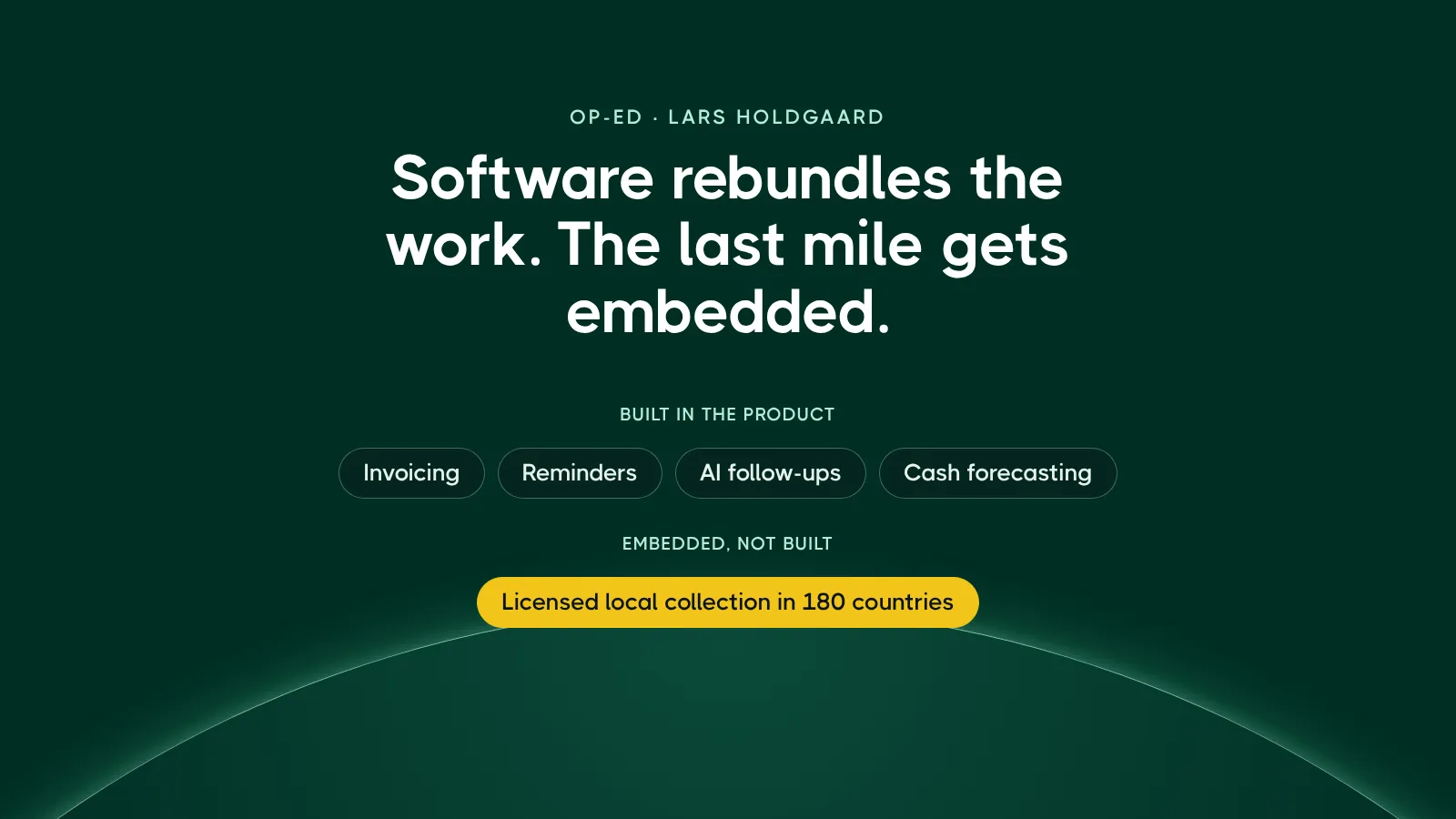
For a decade, software won by doing one thing well. Finance teams bought a tool for invoicing, another for reminders, another for cash forecasting, and stitched them together. That era is ending. AI makes it cheap to build breadth, and investors who once praised focus now argue that AI is rebundling what SaaS unbundled. "The AI playbook rewards breadth," as the investor Tomasz Tunguz put it in March. Analysts have started to talk about service-as-software: products priced on the outcome they deliver rather than the seat they occupy.
I think that is right. I also think it has a consequence few platforms have planned for. When you sell an outcome, you inherit every step needed to deliver it, including the steps software alone cannot do.
Step one: platforms are rebundling around outcomes
An accounts receivable product used to sell visibility: who owes what, and when to chase. An AI-native one sells cash collected. The reminders write themselves, the follow-ups are timed by a model, and the dashboard shows money in the bank rather than tasks done. Outcome pricing changes the economics too. A PitchBook analyst note from February 2026, "SaaS Is Dead, Long Live SaS", describes the move as going from about USD 1,200 a year per seat to about USD 10,000 a year per automated workflow.
The money behind this is large. A BCG and Adyen estimate, cited in Apideck's 2026 report on B2B embedded finance, puts addressable embedded finance revenue for SaaS platforms at USD 185 billion, with less than 20% captured so far. Payments came first, then cards, accounts and lending. Each was the same move: take a financial step your users already need and put it inside the product they already use.
Step two: an outcome includes the hard last mile
If your product promises cash collected, it eventually meets the invoice that stays unpaid after every reminder. Today most platforms stop there. The user is left to find a collection agency, often in another country, and the outcome the platform sold quietly becomes the user's problem.
This is where the rebundling story gets interesting, because the last step of collection is not like the others. It is regulated, and it is local. Who may contact a debtor, what may be charged, how a formal demand must read and how a court claim works all differ by country. The work is done by licensed agencies and law firms who know the local courts and speak the debtor's language. None of that is a prompt. You cannot fine-tune your way to a licence in Germany or to standing in a Brazilian court.
Let me be careful here, because this is where the argument is often overstated. AI does automate a great deal of collection. Some providers market themselves as AI-driven, and they should: drafting letters, choosing the next action, predicting who will pay and when are all things models do well. The claim is not that collection is immune to AI. The claim is narrower and, I think, more useful: the licence and the local execution are the parts that cannot be copied by writing better software.
Step three: so platforms will embed collection, not build it
If the last mile cannot be prompted, a platform has three options. It can leave the step out and let its outcome stop short. It can try to build a licensed collection operation in every country its users invoice, which almost no software company will do. Or it can embed a network that already exists, the way it embedded payments instead of becoming a bank.
The third option is already working. Chaser, an accounts receivable platform in London, added a "Send to collection" step for invoices that stay unpaid after its reminders. Its customers now send those invoices to a local collector in the debtor's country without leaving Chaser. Chaser reports 80% fewer collections enquiries to its customer success team, 30% higher collection volumes and 50% higher success rates. The integration went from kickoff in January 2026 to live in March. Read the Chaser case study.
What the platform builds is small: a button next to the overdue invoice, an API call, a status that comes back. What it does not build is the part that takes years: the local partners, the agreements, the compliance and the court access. That is the division of labour rebundling needs. Software does what software does well, and the regulated work stays with the people allowed to do it.
What this means for platform leaders
If you run a platform that touches invoices, three questions are worth asking now.
- What outcome do your customers think they are buying, and where does your product stop short of it today?
- Which steps in that outcome are regulated or local, and who in your stack is allowed to do them?
- When an invoice stays unpaid after your last reminder, what does your product offer next?
The platforms that answer the third question well will own a step their competitors leave to chance, and in most programs they will earn from it as well. The ones that do not will find that their AI-written reminders were very good at the easy part.
AI is rebundling SaaS. Most of that bundle can be built. The regulated last mile is the part you embed.
Lars Holdgaard is the founder of Debitura, a technology platform that connects businesses and software platforms with licensed local collection agencies and law firms in 180 countries. Software platforms can add collection to their product through the Debitura referral partner program.


Sign up to our newsletter
Get updated on best practices, tips and tricks about international debt collection and accounts receivable management.
