.png)


.png)
.svg)
Kostenlos loslegen
Inkassounternehmen in Mexiko | Schnelle, transparente Beitreibung
Hören Sie auf, überfällige Rechnungen in Mexiko zu verfolgen. Ihre Forderungen werden von ATIVO, unserem lizenzierten lokalen Inkassounternehmen (agencia de cobranza), bearbeitet, was eine schnelle Eintreibung, vollständige Einhaltung der Vorschriften und keine Vorabkosten gewährleistet. Reichen Sie Forderungen in wenigen Minuten ein, verfolgen Sie Echtzeit-Updates und zahlen Sie nur, wenn Ihr Geld zurückerlangt wird.

100 % risikofrei: Sie zahlen nur bei Erfolg
Local debt collection by licensed agency / law firm
Registered agencia de cobranza since 2018 | Part of Debitura's network in 183 countries

Kostenlose Expertenberatung anfordern
Antwort von einem Spezialisten innerhalb von 24 Stunden.
Vielen Dank! Ihre Anfrage wurde empfangen!
Hoppla! Beim Absenden des Formulars ist etwas schiefgelaufen.
Warum Debitura für Inkasso in Mexiko wählen?

Recover unpaid invoices in Mexico without opening a local entity. Debitura connects you to ATIVO, a licensed agencia de cobranza (collection agency) in Mexico City, and you track every step from one dashboard while ATIVO handles debtor contact in Spanish under Mexican law.
What sets us apart
- Licensed local partner: ATIVO is a registered agencia de cobranza, operating under Mexico's commercial and consumer-protection rules.
- No Cure, No Pay: pre-legal collection is success-based; see pricing for current rates.
- Real-time tracking: follow every notice, response and payment through your secure online portal.
- Full legal compliance: actions follow the Código de Comercio (the Commercial Code) and the Código Civil Federal (the Federal Civil Code).
See how Mexico compares internationally with Debitura's collection risk scores worldwide, covering 177 countries.
Beginnen Sie in wenigen Minuten mit der Eintreibung Ihrer Forderungen in Mexiko
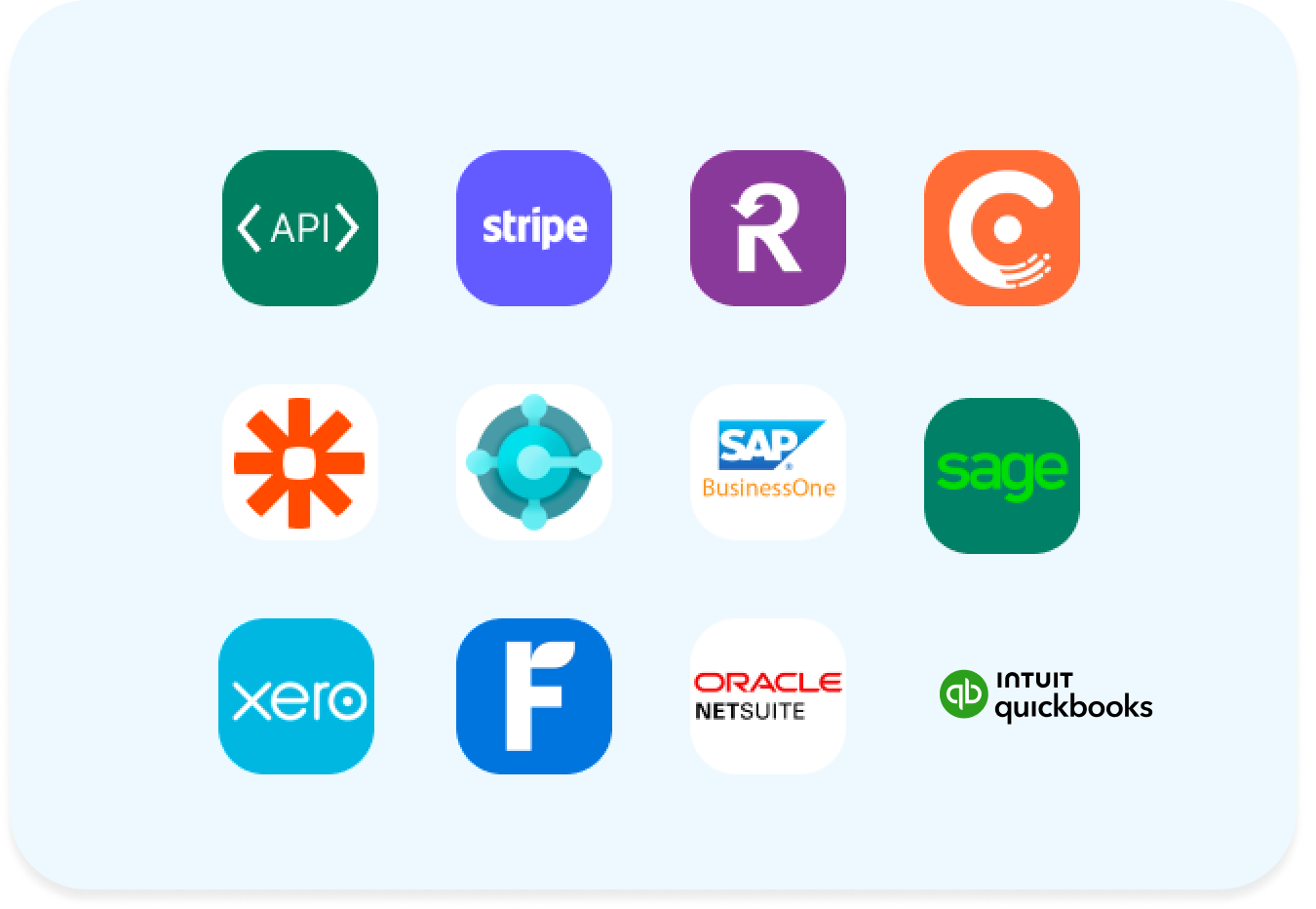
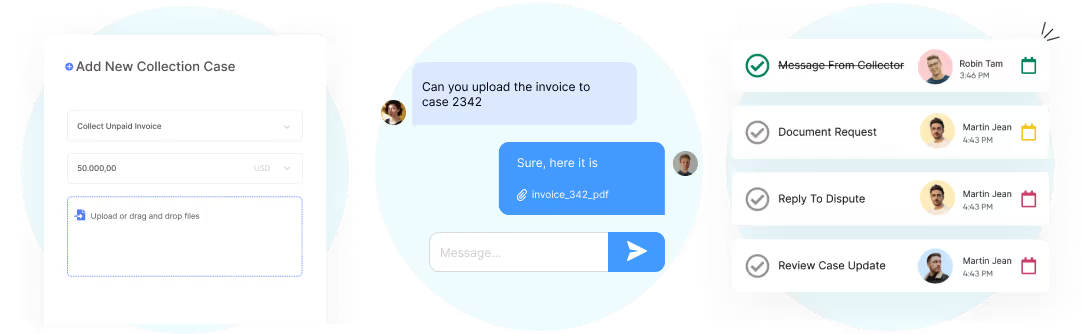
- Forderung einreichen: Laden Sie Ihre unbezahlte Rechnung über das Debitura-Dashboard, die REST-API oder eine Plug-and-Play-ERP-Integration wie Xero oder QuickBooks hoch. Fügen Sie unterstützende Dokumente mit wenigen Klicks hinzu, ohne Papierkram und ohne Einrichtungsgebühren.
- Lokales Inkasso beginnt: Ihr Fall wird an ATIVO übergeben, die in Ihrem Namen den gütlichen Kontakt mit dem Schuldner aufnimmt. Sollte später ein Gerichtsverfahren erforderlich werden, wählen Sie aus Festpreisangeboten für Rechtsdienstleistungen, bevor weitere Schritte unternommen werden, sodass keine Kosten ohne Ihre Zustimmung entstehen.
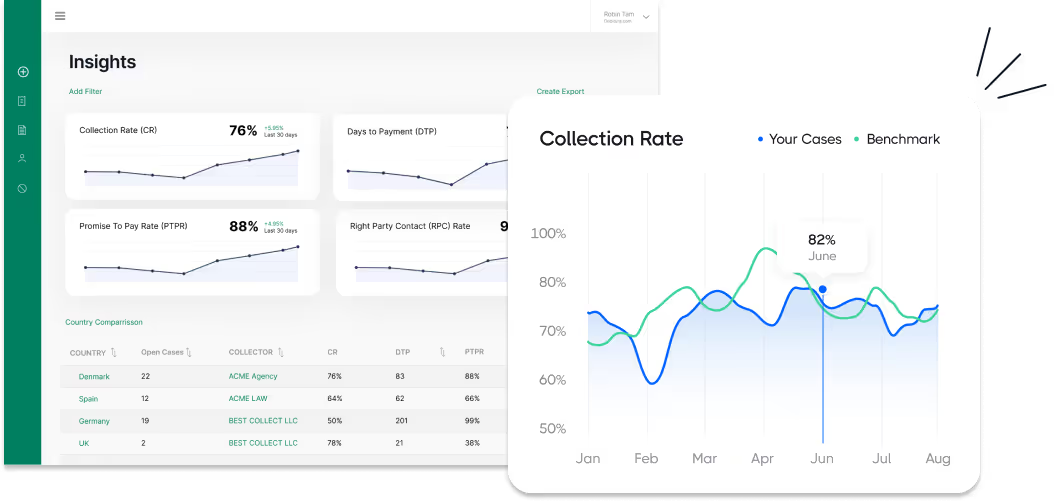
- Verfolgen und bezahlt werden: Verfolgen Sie jede Aktualisierung in Echtzeit auf Ihrem Dashboard, von der ersten Mahnung bis zur letzten Zahlung, mit einer Benachrichtigung bei jedem Meilenstein. Eingezogene Gelder werden Ihnen überwiesen, sobald sie verfügbar sind, und Sie zahlen nur bei Erfolg.

Transparente, erfolgsbasierte Preise
Mit Debitura zahlen Sie nur bei Erfolg. Das vorgerichtliche Inkasso erfolgt auf „Kein Erfolg, keine Gebühren“-Basis: eine Erfolgsprovision, die von den eingezogenen Beträgen abgezogen und lokal von Ihrem Partner in Rechnung gestellt wird. Die Gebühren hängen vom Land des Schuldners ab, nicht von Ihrem.
- Schuldner in Europa (EU, Island, Liechtenstein, Norwegen, Großbritannien und der Schweiz): Erfolgsprovisionen ab 6 % je nach Forderungshöhe.
- Schuldner im Rest der Welt: Erfolgsprovisionen ab 7,5 % je nach Forderungshöhe.
- Ältere Forderungen: Für Forderungen, die 12–24 Monate überfällig sind, sowie für Forderungen, die älter als 24 Monate sind, wird ein Aufschlag berechnet.
- Rechtliche Schritte sind optional: Sie genehmigen Festpreisangebote, bevor rechtliche Ausgaben anfallen.
Die vollständige Gebührenübersicht finden Sie auf der Preise-Seite oder erhalten Sie eine sofortige Schätzung, wenn Sie eine Forderung hochladen.
Wie funktioniert Inkasso in Mexiko?
Inkasso in Mexiko beginnt mit einer gütlichen Phase, die lokal von ATIVO bearbeitet wird: Mahnungen und eine formelle Zahlungsaufforderung, die auf vollständige Zahlung oder eine schriftliche Ratenzahlungsvereinbarung abzielt. Die meisten unkomplizierten Forderungen werden in dieser Phase gelöst. Zahlt der Schuldner weiterhin nicht, erfolgt eine Eskalation niemals automatisch – Ihr Partner prüft den rechtlichen Weg, und Sie genehmigen ein Angebot, bevor gerichtliche Schritte eingeleitet werden.
Wichtige Erkenntnisse
Die vier Schritte von der unbezahlten Rechnung zum eingezogenen Geld
- Schritt 1 – Gütliches Inkasso: Mahnungen, eine formelle Zahlungsaufforderung und Verhandlungen, lokal von ATIVO bearbeitet. Die meisten unbestrittenen Forderungen werden in dieser Phase gelöst, ohne dass es zu einem Gerichtsverfahren kommt.
- Schritt 2 - Vollstreckbarer Titel: Zahlt der Schuldner weiterhin nicht, prüft Ihr Partner den rechtlichen Weg, um einen vollstreckbaren Titel zu erhalten, und Sie genehmigen ein Festpreisangebot, bevor weitere Schritte eingeleitet werden.
- Schritt 3 - Zwangsvollstreckung: Mit einem vollstreckbaren Titel kann die zuständige Vollstreckungsbehörde Löhne, Bankguthaben und andere Vermögenswerte pfänden, bis die Forderung beglichen ist.
- Schritt 4 - Insolvenz: Sollte sich der Schuldner als insolvent erweisen, wird Ihre Forderungsanmeldung eingereicht und eventuelle Ausschüttungen in Ihrem Namen überwacht.
Jeder Schritt wird in Ihrem Dashboard verfolgt, und nichts eskaliert ohne Ihre Zustimmung. Die vollständigen rechtlichen Details für Mexiko – Zeitpläne, Kosten, Gerichte und Zwangsvollstreckung – finden Sie im folgenden Leitfaden.

Kostenlos starten
Keine Einrichtungsgebühr
Zugelassene Experten vor Ort
Kein Erfolg, keine Kosten
Inkasso in Mexiko – der vollständige Leitfaden 2026
Erfahren Sie, wie Inkasso in Mexiko funktioniert – Verfahren, Zeitpläne, Gläubigerrechte und Zwangsvollstreckung – und wie Debitura globalen Gläubigern hilft, überfällige Zahlungen effizient und risikofrei einzutreiben.
Auf dieser Seite:
Warum Sie dieser Anleitung vertrauen können
At Debitura, we uphold the highest standards of impartiality and precision to bring you comprehensive guides on international debt collection. Every guide is written from primary legal sources and reviewed by licensed local experts in the jurisdiction it covers.
Fragen oder Feedback? Senden Sie uns eine E-Mail an contact@debitura.com , wir aktualisieren diesen Leitfaden basierend auf Ihrem Input.
Debitura in Zahlen:
- 767 licensed partners - collection agencies and law firms in our network
- 180 countries covered - with cases handled in 174 of them
- 5,306 businesses registered with Debitura
- 33 days median time to first payment on European cases
Von Experten geleitet, lokal validiert
Verfasst von Lars Holdgaard, Gründer von Debitura (über 10 Jahre Erfahrung im globalen B2B-Forderungseinzug). Jede Seite wird von führenden lokalen Anwälten überprüft, um die rechtliche Genauigkeit und die Anwendbarkeit der praktischen Schritte zu gewährleisten.

Mitwirkende lokale Experten:
Letzte Aktualisierung:
September 9, 2026

Inkasso in Mexiko – schnelle Antworten
Wie hoch sind die Inkassokosten in Mexiko?
Debitura's fee is success-based (No Cure, No Pay, see pricing). Collection-agency fees during the amicable phase are typically contingency-based, so you pay from what is recovered, not upfront. If a case escalates to court, lawyer fees follow local Arancel de Honorarios (bar tariffs), and Mexican courts can additionally order the losing party to pay costas (partial cost reimbursement) under the Código de Comercio, though this is case-by-case and not guaranteed; Mexican civil/commercial filings carry no state filing fee (Código de Comercio art. 1081).
Wie lange dauert Inkasso in Mexiko?
Enforcement alone typically takes 3 to 18 months in Mexico once a judgment is obtained, depending on the type of asset seized: bank-account garnishments move fastest, real estate and vehicle seizures take longer. The amicable phase that precedes it usually runs 60 to 90 days, and the fast-track juicio ejecutivo mercantil resolves faster than the standard juicio oral mercantil, which can extend further through appeals or amparo proceedings.
Welche Dokumente benötige ich, um eine Forderung in Mexiko einzuleiten?
An executable instrument, such as a signed pagaré (promissory note), a letra de cambio (bill of exchange), or a reconocimiento notarial (notarized acknowledgment of debt), qualifies a claim for the fast-track juicio ejecutivo mercantil instead of the standard juicio oral mercantil. Without one of these instruments, a claim proceeds as juicio oral mercantil, which requires fuller evidentiary documentation of the underlying debt.
What are the limitation period and interest rules in Mexico?
Contract and commercial debts generally prescribe after 10 years in Mexico: the Código Civil Federal (the Federal Civil Code, art. 1159) sets a 10-year period for civil obligations absent a shorter special rule, and the Código de Comercio (the Commercial Code, arts. 1043-1047) applies the same 10-year default to most commercial claims, though specific commercial claim types carry shorter 1-year or 5-year periods. Filing a court claim served on the debtor, or the debtor's own acknowledgment of the debt, interrupts the period and restarts the clock (CCF arts. 1168-1169, 1175; CCom arts. 1041-1042). Statutory interest runs at 9% per year on civil debts (CCF art. 2395) and 6% per year on commercial debts where no rate was agreed (CCom art. 362).
| Punkt | Rate/period | Basis |
|---|---|---|
| Civil limitation | 10 Jahre | Código Civil Federal art. 1159 |
| Handelsrechtliche Verjährung | 10 years (1-5 year exceptions apply) | Código de Comercio arts. 1043-1047 |
| Civil statutory interest | 9% per year | CCF art. 2395 |
| Commercial statutory interest | 6% per year | CCom art. 362 |
Wann benötige ich einen Anwalt für Inkasso in Mexiko?
Lawyers are mandatory in virtually all formal judicial actions in Mexico: since a 2017 reform, every mercantile dispute proceeds as a juicio oral mercantil (oral commercial trial) with no monetary ceiling (Código de Comercio art. 1390 Bis), so representation applies regardless of claim size. An appeal is barred only below a periodically indexed threshold, currently MXN $924,300.58 (Código de Comercio art. 1340).
Welcher Weg führt am schnellsten zur Beitreibung einer mexikanischen Forderung?
Amicable collection through a licensed agencia de cobranza such as ATIVO is fastest and resolves most undisputed claims without ever reaching court, under PROFECO's conduct rules and, for financial-services debts, CONDUSEF oversight. Where the debtor does not respond, the fast-track juicio ejecutivo mercantil is next if you hold an executable instrument; the standard juicio oral mercantil is reserved for disputed or complex claims and takes longest.
| Verfahrensweg | Wann es zur Anwendung kommt |
|---|---|
| Außergerichtliche Beitreibung (agencia de cobranza) | Immer der erste Schritt; löst die meisten unbestrittenen Forderungen außergerichtlich, gemäß den PROFECO-Regeln. |
| Juicio ejecutivo mercantil | You hold an executable instrument (pagaré, letra, or reconocimiento notarial). |
| Juicio oral mercantil | Claim is disputed or no executable instrument exists; the standard route since 2017, no value ceiling. |
| Enforcement (ejecución) | Nach dem Urteil, mittels embargo, Bank-/Kontopfändung oder gerichtlicher Versteigerung; 3-18 Monate. |
Wer ist am Inkasso in Mexiko beteiligt?
Mexico's process involves three core players - collection agencies (agencias de cobranza) for amicable recovery, lawyers (abogados mercantiles) for executive/oral-trial litigation, and court officials (actuarios/jueces ejecutores) who execute seizures, garnishments, and auctions.
Collection agencies in Mexico
- Rolle: Verwaltung des außergerichtlichen Inkassos (gestión amistosa), Kontaktaufnahme mit Schuldnern, um freiwillige Zahlungen auszuhandeln, unter Einhaltung der Verhaltensregeln der PROFECO.
- Aufgabenbereich: Ausstellung formeller Mahnungen, Mahnschreiben (cartas de cobranza) und Vereinbarung von Vergleichen vor der Eskalation vor Gericht.
- Licensing: Must be registered with the Public Registry of Commerce; where a despacho de cobranza acts for a regulated financial entity, the LTOSF requires identifiability and gives CONDUSEF/PROFECO power to issue collection-conduct rules.
- Fees: Contingency-based arrangements are standard practice; agencies operate under PROFECO's general consumer-conduct rules.
- Debitura's advantage: Our partner ATIVO operates as a registered agency in Mexico City, ensuring compliance and continuity in amicable recoveries.
Anwälte in Mexiko
- Role: Represent creditors in juicio ejecutivo mercantil (the fast-track executive trial) and juicio oral mercantil (the standard commercial trial that has applied to every mercantile dispute, with no value ceiling, since a 2017 reform).
- Scope: Draft legal claims, obtain embargo (asset-seizure) orders, represent clients in hearings, appeals, and amparo proceedings.
- Court access: Lawyers are mandatory in virtually all formal judicial actions; an appeal is barred only below a periodically indexed threshold, currently MXN $924,300.58 (Código de Comercio art. 1340).
- Fees: Governed by local Bar tariffs (Arancel de Honorarios); courts may order partial reimbursement (costas).
- Debitura's advantage: We connect you with vetted commercial litigators experienced in Mexican and cross-border cases.
Court officials and bailiffs in Mexico
- Role: Enforce judgments and executive-trial orders through official seizure, garnishment, and auction procedures.
- Scope: Execute embargo (asset seizure), bank garnishments, and judicial auctions; ensure due process and documentation.
- Supervision: Operate under court authority; cannot act independently or outside judicial orders.
- Enforcement duration: Typically 3-18 months depending on asset type (accounts, real estate, vehicles).
- Debitura's advantage: Our network coordinates directly with local courts and actuarios to keep enforcement lawful and documented.
Welche Gesetze und Gerichte gelten für das Inkasso in Mexiko?
Mexico is a federal republic: commercial law is federal, but civil procedure has historically been state-by-state, and a new national procedure code is now rolling out. Clear but multi-layered rules blend federal codes with this state-by-state practice, from the fast-track juicio ejecutivo mercantil to strict consumer-protection conduct.
Das Zivilgerichtssystem in Mexiko
- Juicio ejecutivo mercantil: fast-track route if you hold an executable instrument (pagaré, letra, reconocimiento notarial); the court orders payment and, on default, an immediate embargo (Código de Comercio arts. 1391-1392).
- Juicio oral mercantil: the standard commercial trial for disputed claims or where no executable instrument exists; since a 2017 reform it applies to every mercantile dispute with no monetary ceiling (art. 1390 Bis).
- Concurrent jurisdiction: commercial matters can fall to state or federal courts (Constitución art. 104 fr. I-A, Código de Comercio art. 1100).
- Enforcement (ejecución): via embargo, bank/account seizures, and judicial auctions.
Schlüsselgesetze in Mexiko
- Código Civil Federal (the Federal Civil Code) and Código de Comercio (the Commercial Code): govern civil/commercial obligations, evidence, and limitation (prescripción).
- Código Nacional de Procedimientos Civiles y Familiares (CNPCF), Mexico's new national civil/family procedure code: published 7 June 2023, rolling out toward full nationwide effect by 1 April 2027, replacing the old state-by-state civil procedure codes.
- Ley de Concursos Mercantiles (the Business Insolvency Law): governs conciliación and quiebra/liquidation for merchant debtors.
- Ley para la Transparencia y Ordenamiento de los Servicios Financieros (LTOSF) and the Ley Federal de Protección al Consumidor (LFPC): give CONDUSEF and PROFECO conduct-oversight and sanctioning power over collection practices, particularly for financial-sector debts.
Verbraucherschutz in Mexiko
- PROFECO rules: no harassment, clear identification, accurate debt details, respectful contact hours; PROFECO holds sanctioning power under LFPC arts. 62 fr. VI and 128.
- CONDUSEF oversight for financial-services collections.
- Obligatorische Angaben: Betrag, Ursprung, Rechtsgrundlage, Recht auf Einspruch/Berichtigung.
- Datenverarbeitung im Einklang mit dem Datenschutzgesetz; dokumentierte, nachvollziehbare Kommunikation erforderlich.
- Verstöße bergen das Risiko von Geldstrafen und können die Zwangsvollstreckung gefährden.
Schritt 1 - Wie funktioniert die außergerichtliche (vorgerichtliche) Forderungsbeitreibung in Mexiko?
Die außergerichtliche Beitreibung in Mexiko wird von einer lizenzierten agencia de cobranza wie unserem Partner ATIVO durchgeführt: Die Agentur überprüft die Forderung und den Schuldner, versendet förmliche Mahnungen und Zahlungsaufforderungen (cartas de cobranza) und verhandelt über eine freiwillige Zahlung oder einen schriftlichen Ratenzahlungsplan, wobei stets die Verhaltensregeln von PROFECO bezüglich Kontaktzeiten, genauer Offenlegung der Schuld und Nichtbelästigung eingehalten werden. Inkassobüros müssen im mexikanischen Handelsregister (Public Registry of Commerce) registriert sein; unlizenzierte Beitreibung ist verboten. Jede Mitteilung muss den Betrag, den Ursprung und die rechtliche Grundlage der Forderung angeben, und der Schuldner behält jederzeit das Recht, die Forderung anzufechten oder eine Berichtigung zu verlangen.
| Tag | Aktion |
|---|---|
| Tag 0-10 | Forderung und Schuldner überprüft; erste förmliche Mahnung versandt, die Betrag, Ursprung und rechtliche Grundlage der Forderung nennt. |
| Tag 10-30 | Nachfolgende cartas de cobranza und direkter Kontakt zur Verhandlung über eine Zahlung oder eine schriftliche Ratenzahlungsvereinbarung. |
| Tag 30-60 | Ein Vergleich wird abgeschlossen, wenn der Schuldner kooperiert; reagiert der Schuldner nicht, wird der Fall für eine rechtliche Prüfung vorgemerkt. |
| Tag 60-90 | Die außergerichtliche Phase wird abgeschlossen; bleibt die Angelegenheit ungelöst, prüft ein Anwalt die Möglichkeit eines Schnellverfahrens oder eines ordentlichen Gerichtsverfahrens. |
Die Einleitung rechtlicher Schritte ist niemals automatisch: Ihr Partner prüft zunächst, ob Sie einen vollstreckbaren Titel (wie ein Pagare, eine Letra oder ein Reconocimiento Notarial) besitzen, und Sie genehmigen ein Festpreisangebot, bevor jegliche rechtliche Schritte eingeleitet werden. Die Kommunikation bleibt dabei stets dokumentiert und nachvollziehbar, im Einklang mit den mexikanischen Datenschutzbestimmungen für das Inkasso.
Schritt 2 - Wie erhalten Sie einen vollstreckbaren Titel in Mexiko?
If amicable collection fails, your lawyer determines whether your claim qualifies for juicio ejecutivo mercantil (the fast-track executive trial) or requires juicio oral mercantil (the standard commercial trial), based on whether you hold an executable instrument.
Juicio ejecutivo mercantil (beschleunigtes Verfahren)
Juicio ejecutivo mercantil is available when the creditor holds an executable instrument, such as a signed pagaré (promissory note), a letra de cambio (bill of exchange), a judicial confession, or a reconocimiento notarial (notarized acknowledgment of debt). The court orders payment and, on default, orders an immediate embargo (asset seizure) to secure the claim (Código de Comercio arts. 1391-1392); the debtor then has 8 days to pay or raise defences (art. 1396), which is what makes this route faster than the standard trial.
Juicio oral mercantil (the standard commercial trial)
Juicio oral mercantil applies when the claim is disputed or no executable instrument exists. Since a 2017 reform it applies to every mercantile dispute with no monetary ceiling (Código de Comercio art. 1390 Bis), and follows the full evidentiary process under the Código de Comercio; a national procedure code, the Código Nacional de Procedimientos Civiles y Familiares (CNPCF), published 7 June 2023, is rolling out toward full nationwide effect by 1 April 2027. Appeals and amparo proceedings can extend the timeline beyond the standard court calendar.
Bestimmung des zuständigen Gerichts in Mexiko
Commercial claims in Mexico are filed with the civil or commercial court in the debtor's domicile or the place of performance of the obligation. Jurisdiction can be concurrente (concurrent) between state and federal courts for certain commercial matters (Constitución art. 104 fr. I-A, Código de Comercio art. 1100). Since the 2017 reform, every mercantile dispute proceeds as juicio oral mercantil regardless of value; an appeal is barred only below a periodically indexed threshold, currently MXN $924,300.58 (art. 1340).
Rechtskosten in Mexiko
Lawyer fees are governed by local Arancel de Honorarios (bar tariffs), and Mexican courts can order the losing party to pay costas (partial cost reimbursement), though this is case-by-case and not guaranteed; there is no state filing fee for judicial acts (Código de Comercio art. 1081). Once a judgment is secured, enforcement (ejecución) through embargo, bank or account seizure, or a judicial auction is carried out under the supervision of court officials (actuarios/jueces ejecutores), who act only under judicial authority.
Schritt 3 - Wie funktioniert die Zwangsvollstreckung von Forderungen in Mexiko?
Enforcement in Mexico follows directly from the fast-track juicio ejecutivo mercantil: once the court confirms the creditor holds an executable instrument (a pagaré, a letra de cambio, a judicial confession, or a judicially recognised invoice or contract), it orders payment and, on default, orders an immediate embargo (asset seizure) to secure the claim (Código de Comercio arts. 1391-1392). The debtor then has 8 days to pay or raise defences before the case proceeds (art. 1396). Because this route already includes an early embargo before final judgment, creditors holding a qualifying instrument can secure assets well before the case concludes, unlike claimants proceeding under juicio oral mercantil, who must wait for judgment before any enforcement measure is available.
Ways to enforce a claim in Mexico
- Embargo (asset seizure): court officials (actuarios) seize identified assets, bank balances or receivables to secure or satisfy the judgment.
- Judicial auction: seized assets are sold at auction and proceeds applied to the debt, interest and costas.
- Account measures: enforcement can reach identified bank accounts within the seizure order's scope.
The enforcement process in Mexico
- Confirm the title: the court verifies the executable instrument or judgment before ordering embargo.
- Locate assets: the creditor's counsel identifies bank accounts, receivables or property to target.
- Embargo and, where needed, auction: actuarios/jueces ejecutores carry out the seizure under court supervision; defences raised in the 8-day window can delay the process.
- Distribution: proceeds are applied to principal, statutory interest and any court-awarded costas; any surplus returns to the debtor.
Enforcement officials (actuarios/jueces ejecutores) act only under judicial authority; they cannot seize assets or garnish accounts without a court order. Enforcement timelines typically run from a few months to well over a year, depending on asset type and whether the debtor raises defences or appeals.
Schritt 4 - Wie wirken sich Insolvenzverfahren auf die Beitreibung von Forderungen in Mexiko aus?
A Mexican merchant debtor (comerciante) enters concurso mercantil (business insolvency) when it meets a two-part test: 35% or more of its obligations are 30 or more days overdue, and its liquid assets cover less than 80% of that overdue amount (Ley de Concursos Mercantiles art. 10). Concurso mercantil applies only to comerciantes; individual, non-merchant insolvency is a separate, state-level Civil Code matter.
Types of insolvency and likely outcomes in Mexico
- Conciliación: the first stage, aimed at a court-supervised restructuring agreement between the debtor and its creditors; runs up to 185 days, extendable to a maximum of 365 days in total (LCM arts. 2-3, 145).
- Quiebra (liquidation): opens if conciliación fails or is not viable; the debtor's assets are realised and distributed to creditors by statutory priority.
- Who can file: the debtor itself, any creditor, or the Public Prosecutor (Ministerio Público) can petition for concurso mercantil.
Creditor priority in a Mexican concurso mercantil
Distributions follow a fixed order: singularly-privileged claims first, then secured (real-guarantee) creditors, then special-privilege claims, then common creditors pro rata, then subordinated claims last (LCM arts. 217-224). Labour and tax claims, and the costs of administering the estate, are prioritised within or ahead of this order.
| Priority rank | Creditor class |
|---|---|
| 1 | Singularly-privileged claims |
| 2 | Secured (real-guarantee) creditors |
| 3 | Special-privilege claims |
| 4 | Common creditors (pro rata) |
| 5 | Subordinated claims |
The insolvency process for creditors in Mexico
- Detect and verify: identify the proceeding (conciliación or quiebra), the court, and the appointed conciliador/síndico.
- Stop individual action: concurso mercantil generally pauses individual enforcement against the debtor's assets.
- File a proof of claim: submit supporting documentation (contract, invoices, statement of account) within the court-set deadlines.
- Participate: attend creditors' meetings and monitor the conciliación timetable; active participation improves standing under the priority rules.
- Track distributions: in quiebra, recovery follows the statutory priority order above; unsecured, common creditors are typically paid last and often recover only a share of their claim.
Gebühren, Zinsen und wer was in Mexiko zahlt
- Unsere Gebühr: erfolgsbasiert, Kein Erfolg, keine Gebühren (siehe Preise).
- Court & enforcement fees: lawyer fees follow the local bar tariff (Arancel de Honorarios), and court execution costs such as an embargo or a judicial auction arise only if the case escalates to a juicio ejecutivo mercantil or the standard juicio oral mercantil; a Mexican court can order the losing party to pay costas (partial cost reimbursement) under the Código de Comercio, decided case by case. There is no state filing fee for Mexican civil/commercial judicial acts (art. 1081).
- Statutory debtor items: where no contractual rate is agreed, a commercial debt accrues statutory default interest at 6% per year (Código de Comercio art. 362), and a civil debt accrues interest at 9% per year (Código Civil Federal art. 2395), both from the day after the due date. Interest and any court-awarded costas can be added to the claim.
- Wer was behält: Der eingetriebene Kapitalbetrag gehört Ihnen; Zinsen und Kosten richten sich nach dem Vertrag, dem Gesetz und der gerichtlichen Anordnung.
Finden Sie einen Rechtsanwalt für Inkasso vor Ort
Benötigen Sie eine gerichtsfeste Vertretung? Teilen Sie uns Ihren Fall einmal mit und erhalten Sie bis zu drei Angebote von geprüften Prozessanwälten. Kostenlos, schnell und unverbindlich.
- Geprüfte Spezialisten
- Angebote in 24 Stunden, keine versteckte Gebühren
- Faire, vorab ausgehandelte Preise

DE HOYOS AVILES
De Hoyos Aviles ist eine führende Anwaltskanzlei in Mexiko-Stadt, die effektive Inkassodienstleistungen in Mexiko anbietet. Sie wurde 1964 gegründet, ist bekannt für ihr Martindale-Hubbell Peer AV Preeminent Rating und betreut Mandanten in den Vereinigten Staaten, Kanada und Europa.
.webp)
Gerichtsverfahren
gerichtliches Inkasso
Zwangsvollstreckung
.png)
50

1964
.png)
Anwaltskanzlei
Blvd. Independencia #3890 Locales 6 y 7. Col. El Fresno.
Torreon, Mexiko
Inkassodienstleistungen Mexiko
DCS Mexico ist eine führende Inkassofirma in Torreon, die effektive Inkassodienstleistungen in Mexiko anbietet. Sie ist seit 2009 der bevorzugte Partner, rangiert auf Platz 8 der Top-10-Proveedores und ist Mitglied von APCOB.
Gerichtsverfahren
gerichtliches Inkasso
Zwangsvollstreckung
25
2009
Inkassounternehmen
Av. Insurgentes #615
Col. Nápoles, Mexiko
ATIVO
ATIVO ist ein führendes Inkassounternehmen in Mexiko, das seit 2018 effektive, risikofreie Inkassodienstleistungen anbietet und über 180 Länder bedient, als exklusiver Debitura-Partner in Mexiko mit Konditionen zur erfolgsabhängigen Vergütung basierend auf dem risikofreien Standard von Debitura.
Gerichtsverfahren
gerichtliches Inkasso
Zwangsvollstreckung
10
2018
Inkassounternehmen
Häufig gestellte Fragen
Entdecken Sie unsere häufigsten Fragen und Antworten unten, oder kontaktieren Sie uns direkt unter contact@debitura.com, wenn Sie Hilfe bei einem bestimmten Fall benötigen.
Wie viel kostet ein Inkassounternehmen in Mexiko?
.svg)
Debt collection agencies in Mexico typically operate on a No Win, No Fee basis for the amicable phase, so you pay nothing unless money is recovered. Debitura's own fee follows the same success-based model; see pricing for current rates by claim size. Legal escalation, if needed, adds itemized court and lawyer costs, always requiring your approval in advance.
Können ausländische Unternehmen ein Inkassounternehmen in Mexiko beauftragen?
Ja, ausländische Unternehmen können ein Inkassounternehmen in Mexiko beauftragen. Internationale Unternehmen nutzen üblicherweise lokale, lizenzierte Agenturen, um sich effektiv in Mexikos rechtlicher und kultureller Landschaft zurechtzufinden. Agenturen wie Debitura's lokaler Partner, ATIVO, verwalten grenzüberschreitende Forderungen effizient, gewährleisten die Einhaltung mexikanischer Vorschriften und optimieren die Wahrscheinlichkeit einer erfolgreichen Beitreibung.
Wann sollte mein Unternehmen eine Forderung in Mexiko eskalieren und rechtliche Schritte einleiten?
Rechtliche Schritte werden typischerweise notwendig, wenn außergerichtliche Inkassobemühungen – wie Mahnschreiben oder Verhandlungen – nach 30–60 Tagen scheitern oder wenn der Schuldner die Zahlung eindeutig verweigert. Die Einleitung eines juicio ejecutivo mercantil kann Maßnahmen wie eine vorläufige Vermögenspfändung (embargo precautorio) umfassen, um Ihre Forderung frühzeitig zu sichern. Die Einleitung rechtlicher Schritte ist ratsam, wenn der Schuldner konsequent die Kooperation verweigert oder die Gültigkeit der Forderung bestreitet.
Wie lange dauert das Inkassoverfahren in Mexiko typischerweise?
Die Dauer des Inkassos in Mexiko hängt von der Komplexität des Falles ab. Das außergerichtliche Inkasso dauert in der Regel 15 bis 30 Tage. Wenn rechtliche Schritte erforderlich sind, werden unkomplizierte Exekutivverfahren (Juicio Ejecutivo Mercantil) in der Regel innerhalb von 6 bis 12 Monaten abgeschlossen. Komplexe Fälle mit Berufungen oder Vermögensbeschlagnahmungen können den Zeitrahmen erheblich verlängern und oft 1 bis 3 Jahre bis zur vollständigen Klärung dauern.
Welche gesetzlichen Bestimmungen gelten für Inkassobüros in Mexiko?
Das Inkasso in Mexiko wird hauptsächlich durch den Código de Comercio (Handelsgesetzbuch) geregelt, der landesweit für Handelsschulden gilt. Zu den weiteren Gesetzen gehören der Código Civil Federal (Bundesgesetzbuch) für zivilrechtliche Verpflichtungen und die von der PROFECO gemäß der Ley Federal de Protección al Consumidor geregelten Verbraucherschutzstandards. Die Inkassobüros müssen diese rechtlichen Rahmenbedingungen strikt einhalten, um konforme und ethische Inkassopraktiken zu gewährleisten.
Welche Informationen sind erforderlich, um das Inkasso in Mexiko zu starten?
Um ein Inkasso in Mexiko einzuleiten, benötigen Sie in der Regel Unterlagen, die die Forderung eindeutig belegen. Zu den wesentlichen Dokumenten gehören Originalrechnungen, unterzeichnete Verträge, Schuldscheine und Korrespondenz, aus der frühere Inkassobemühungen hervorgehen. Für Gläubiger in Form von Unternehmen ist ein Nachweis der Vertretungsbefugnis (z. B. eine Vollmacht) erforderlich, insbesondere bei der Einleitung formeller Gerichtsverfahren.
Benötigen Sie zusätzliche Länder?
“Debitura recovered well over 100,000 euros in overdue invoices for us across several countries, all through one contract and one dashboard. Local experts handle each market and we only pay when they actually collect — so our team can spend that time on what we do best: helping our own customers engage smarter with the Manago AI platform.”
Manago AI (formerly SALESmanago)
767
Licensed collection agencies and law firms in our network
180
Countries covered, with cases handled in 174 of them
5,306
Businesses registered with Debitura
.svg)